

News|Articles|June 10, 2026
The Creation of New Point-of-Care Platforms Using Surface-enhanced Raman Spectroscopy and Digital Microfluidics
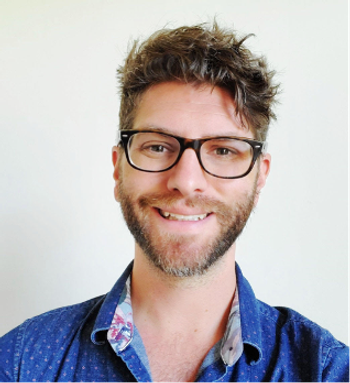
Author(s)Sian Sloan-Dennison, Will Wetzel
The combination of surface-enhanced Raman spectroscopy (SERS) and digital microfluidics (DMF) might be able to improve detection of liver injury biomarkers.
Advertisement
A recent Spring SciX interview with Sian Sloan-Dennison, a postdoctoral research associate at the University of Strathclyde, discussed the combination of surface-enhanced Raman spectroscopy (SERS) and digital microfluidics (DMF)
Below, we highlight Sloan-Dennison’s comments about this new technology and what it means for
Can you talk about the key topics and themes that you took away from the Spring SciX conference, and what topics attendees were talking about the most?
I think one of the key topics that I took from Spring SciX was really about the challenge of translating Raman and surface-enhanced Raman spectroscopy (SERS) into point-of-care settings, and we discussed some of the major barriers, such as like your devices having to reach strict medical conditions set by governing bodies like the Medicines and Healthcare products Regulatory Agency (MHRA), and how we try and meet these criteria in order to push these devices forward. That goes on to how we can all make these fantastic devices and show their clinical applications while making sure that they're getting into the right hands so that the doctors and nurses who want to use these devices can use them.
You don't have to be a trained spectroscopist to use this. I think this was quite interesting, like how do we take a step back from getting all this excellent data, but what does that mean if somebody who is going to use it can't use it? So, we had a really good discussion, and then the session that I was in was about how we translate our work into the clinic. We also touched on how you need to have a clinical champion who wants to use your instrument or the Raman or SERS assay in the clinic, and they're going to be the ones pushing for it. So, I thought that was a really interesting challenge that came up at Spring SciX in terms of what people were talking about. There were a lot of
I want to get into some of the details that you discussed in your talk. Can you provide a brief overview of the talk that you delivered at the conference?
My talk was on how we are combining a platform called digital microfluidics, or DMF, with SERS scattering, and we're trying to do this to create this point-of-care platform that we can use to detect liver injury biomarker microRNA-122. We've chosen DMF as it is lab-on-chip technology, and it uses electrowetting for us to manipulate small microliter droplets of our sample. We can perform a lot of different assays on our DMF chip, such that we can manipulate the droplets moving, we can merge them, we can slip them, we can incubate them, and we can then concentrate them. Usually, the DMF is paired with different readout techniques, such as chemiluminescence and fluorescence readouts, and they provide sensitive results. However, we think that by using the sensitivity that SERS gives us, we could pair DMF with handheld SERS measurements, and this could really increase the limit of detections for lots of different biomarkers, including microRNA-122. So, what we did was start to build this solution-based assay for detection of microRNA-122 where we're using hybridization and then a magnetic capture element. In solution, we can detect roughly 10 picomolar of the microRNA, and this is really good. It's within that clinical threshold, but we translated the solution-based assay to the DMF chip, concentrating a lot of the samples. And by using a lot less sample volume, we found that we could go from 10 picomolar to 500 femtomolar, so just by changing and putting our assay on the DMF, we've already got an approximately 10-fold difference in sensitivity, so we're hoping to push this forward and start using clinical samples to really see where can we push DMF-SERS.
What are the main problems with the current diagnostic tests that are out there for assessing drug-induced liver injury?
The drug-induced liver injury (DILI) that we are interested in detecting and learning more about is caused by paracetamol or acetaminophen. When you present to accident emergency following a paracetamol overdose, you go into a triage situation where your blood is taken intravenously before being sent to the central laboratory and has to be processed, and a trained technician will run a series of liver function tests looking for different biomarkers, and the most, the biomarker they're most predominantly looking for is called alanine immuno transfers, or ALT. This process takes a while. It can take up to six hours for patients to get the results back, at which case that liver injury, if they do have it, is progressively getting worse, and we've delayed the treatment. So, there's also an issue with this ALT biomarker, it's slow to rise, so if you're taking someone's blood and not getting the results until six hours after, it might not be at the correct level at that first time point, and this has led to a lot of missed daily diagnosis as well, so where we're coming along is we want to try and detect different biomarkers that we know start to increase faster following paracetamol overdose. We've had some success with first detecting protein biomarker, keratin 18, and we've done this with a lateral flow to be paired with SERS, and we can quantify the concentration and serum and blood, but micro RNA actually increases faster than kerosene, so our new target is the microRNA-122 to see if this could lead to faster daily diagnosis and a better kind of patient stratification in that accident and emergency setting.
Tomorrow, we will continue our conversation with Sloan-Dennison to discuss the integration of SERS with DMF more in depth.
References
- Sloan-Dennison, S.; Wetzel, W. Why Current Tests for Assessing Drug Induced Liver Injury Fall Short. Spectroscopy. Available at:
https://www.spectroscopyonline.com/view/why-current-tests-for-assessing-drug-induced-liver-injury-fall-short (accessed 2026-05-26). - Sloan-Dennison, S.; Wetzel, W. What were the Main Takeaways of the Spring SciX Conference? Spectroscopy. Available at:
https://www.spectroscopyonline.com/view/what-were-the-main-takeaways-of-the-spring-scix-conference (accessed 2026-05-26). - Sloan-Dennison, S.; Wetzel, W. The Benefit of Integrating a SERS Assay with a Digital Microfluidics Platform. Spectroscopy. Available at:
https://www.spectroscopyonline.com/view/the-benefit-of-integrating-a-sers-assay-with-a-digital-microfluidics-platform (accessed 2026-05-26). - Sloan-Dennison, S.; Wetzel, W. The Current Skills Gaps in Biological and Clinical Analysis. Spectroscopy. Available at:
https://www.spectroscopyonline.com/view/the-current-skills-gaps-in-biological-and-clinical-analysis (accessed 2026-05-26). - Sloan-Dennison, S.; Wetzel, W. Securing a Postdoctoral Position at a Research University. Spectroscopy. Available at:
https://www.spectroscopyonline.com/view/securing-a-postdoctoral-position-at-a-research-university (accessed 2026-05-26).
Advertisement
Related Content
Advertisement



Advertisement
Advertisement