|Webcasts|December 1, 2020

The Power of Polycapillary Optics & Their Critical Role in Seeking Life on Mars

Author(s)XOS

***Live: December 1, 2020 at 11am EST| 8am PST| 4pm GMT| 5pm CET *** Are you interested in learning how polycapillary optics enhance micro-XRF analysis? Register for this webcast for more information on micro-XRF, polycapillary optics, and how these advances can be applied in [advanced research, practical industrial applications, or whatever is relevant] as well as how their role on the Mars 2020 rover, Perseverance! *** On demand available after final airing until Dec.. 1, 2021.***

Register free: ​https://www.spectroscopyonline.com/spec_w/power

Event Overview:

Are you interested in learning more about polycapillary X-ray optics and their role in the Mars 2020 mission?

You will also learn more about how you can enhance your micro-XRF analysis using polycapillary optics. You will have the opportunity to learn about:

  • Fundamentals of the physics behind X-ray optics, including polycapillary optics
  • Different types of optics, including their optic performance, and their applications
  • Polycapillary subsystem application options

Key Learning Objectives:

  • Develop a clear understanding of an X-ray optical system and its importance for both the system designers and the end users.
  • Understand the different types of polycapillary optic and their benefits and uses.

Speaker: Ning Gao, Ph.D., Director, OEM & X-ray Optics, XOS

Time and Date: December 1, 2020 at 11am EST| 8am PST| 4pm GMT| 5pm CET

On demand available after final airing until Dec. 1, 2021

Sponsor: XOS

Register free: https://www.spectroscopyonline.com/spec_w/power


Related to this article

Spectroscopy Top 10 DOI Articles of the Month (September 2026)
The following articles are the most accessed digital object identifier (DOI) manuscripts for Spectroscopy and LCGC International during the month of September 2026. Nine articles are individually ranked here by DOI page views; the third-highest entry (186 views) was recorded against the bare journal-level DOI rather than an individual article and is therefore not attributable to a single manuscript.
Work of the surgeon in the hospital operating room. Concentrated doctor with glasses. | Image Credit: © velimir - stock.adobe.com
Jürgen Popp explains how head and neck surgeons in Jena use a Raman probe to locate tumor borders, why the technique could replace frozen section biopsies, and why optical tools must adapt to clinical workflows rather than the other way around.
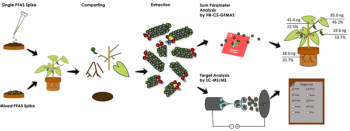
PFAS spiking experiments in bean plants (Phaseolus vulgaris)
Atomic Perspectives
This Atomic Perspectives column explains how high-resolution continuum source graphite furnace molecular absorption spectrometry (HR-CS-GFMAS) quantifies extractable organic fluorine (EOF) as a PFAS sum parameter, complementing LC-MS/MS target analysis, with applications to German river sediments, bean plants, and fluorinated polymer sealing materials.