The 2026 Ellis R. Lippincott Award recipient discusses the barriers to clinical adoption of photonic diagnostics and his vision for personalized optical digital twins.
The Atacama Large Millimeter/submillimeter Array (ALMA) and the James Webb Space Telescope (JWST) are being used by astronomers and scientists to learn more about interstellar chemistry.
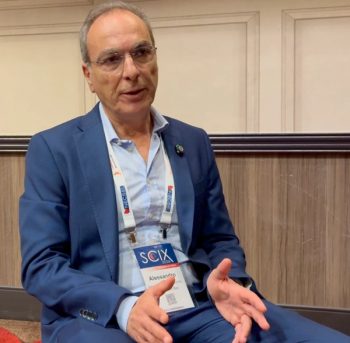
In a recent interview with Spectroscopy, Miguel Sanz-Novo, an Alexander von Humboldt Fellow at the Max Planck Institute for Extraterrestrial Physics, discussed how advanced astronomical observatories are transforming the study of interstellar chemistry and enabling new discoveries about the molecular processes that occur during star formation.1,2 Central to this work are the Atacama Large Millimeter/submillimeter Array (ALMA) and the
According to Sanz-Novo, ALMA has been particularly transformative for astrochemistry because of its exceptional sensitivity and spatial resolution. These capabilities allow researchers to map the distribution of molecules across a variety of
Although ALMA plays a major role in many studies, Sanz-Novo noted that much of his team’s research on molecular clouds near the Galactic Center relies on observations from single-dish radio telescopes. Recent technological advances have significantly expanded the capabilities of these instruments. One example is the installation of an ultra-broadband receiver on the Yebes 40-meter radio telescope in Spain. This receiver enables astronomers to observe the entire Q-band frequency range, approximately 30–50 GHz, in a single observation, dramatically improving survey efficiency and the ability to detect previously unknown molecules.
Among the discoveries highlighted by Sanz-Novo, the detection of a six-member sulfur-bearing ring molecule stands out as particularly significant. Reported in Nature Astronomy, the molecule is the largest sulfur-containing species identified in the interstellar medium to date. The finding provides an important link between the chemistry occurring in molecular clouds during the earliest stages of star formation and the sulfur-rich compounds observed in minor bodies throughout the Solar System. Sanz-Novo emphasized that this breakthrough illustrates the power of combining laboratory experiments, theoretical studies, and astronomical observations to push the boundaries of known chemical complexity in space.