Whether you are new to ICP-MS or an experienced analyst, knowing how to avoid or minimize common time-wasting activities will make your life easier and your results more reliable.
Many of the tips and techniques in this eBook are relevant to any lab and any ICP-MS instrument. From ways to avoid over range results through to knowing how much instrument maintenance the right amount is, the eBook covers every step of owning and using an ICP-MS.
Top content published this week include a feature article on a new innovation called the Personalized Optical Digital Twin (PODT), a recap of the International Conference on Raman Spectroscopy (ICORS) 2026 show, and a Q&A on measuring nanoparticle formation in indoor air.
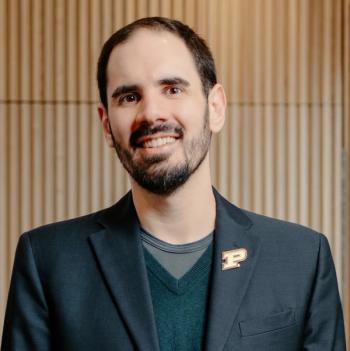
In the final part of our conversation with Brandon Boor of Purdue University, he explains the respiratory deposition model his team used to analyze indoor particle exposure.
In the second part of our interview with Brandon Boor of Purdue University, he discusses how his team controls experimental variables during cleaning experiments in order to obtain interpretable data.
An upcoming interview with Ji-Xin Cheng, a Theodore Moustakas Distinguished Professor in Photonics and Optoelectronics at Boston University, will highlight his ongoing work in coherent Raman scattering microscopy.
The bulky bench-top NIR spectrometer is quietly being dismantled and rebuilt as a wafer-scale photonic chip, a self-calibrating algorithm, and a sensor small enough to ride in a shirt pocket. What once demanded a grating, a moving mirror, and a climate-controlled lab now fits inside a handheld module, a bioreactor probe, or a drone payload, and it increasingly figures out what it is looking at on its own.
In the first part of a multi-part Q&A, Brandon Boor, the Dr. Margery E. Hoffman Associate Professor in the Lyles School of Civil and Construction Engineering at Purdue University, describes the instrumentation and methodology behind measuring nanoparticle size distributions at the nanocluster scale (1–3 nm) and outlines the technical challenges of acquiring reliable, real-time data at these dimensions.