
Sponsored Content
Standardized methods (or official international methods) exist for stable isotope analysis of food and beverage samples and are aimed at protecting product origin, authenticity and label claims.
Sponsored Content
Standardized methods (or official international methods) exist for stable isotope analysis of food and beverage samples and are aimed at protecting product origin, authenticity and label claims.
Sponsored Content
Take the stress out of the harvest season with automated sample analysis! Ensure your product is the same year-to-year with fully automated, extremely reliable and specific QC testing throughout the growing process! Live: Friday, Dec. 14, 2018 at 11am EST | 8am PST | 4pm GMT | 5pm CET / On Demand: available after airing until Dec. 14, 2019. Register free: http://www.chromatographyonline.com/lcgc_w/accurate
Application Notebook
Special Issues
High resolution mass spectrometry with nano-LC is used for protein identification and quantification in both top-down and bottom-up proteome analysis. Reliable instrumentation in combination with ultrapure mobile phases is essential for data integrity. Premixed 80% acetonitrile with 0.1% formic acid (LS122-500) and water with 0.1% formic acid (LS118-500) were designed to produce a consistent chromatographic performance using this instrument system. In this study, these mobile phases were used extensively to evaluate several factors which can affect separation of protein digests such as peak retention, peak repeatability, and sample carryover. Our results demonstrated excellent chromatographic performance using Thermo Scientific EASY-nLC 1200 LC system and Thermo Scientific LTQLX ™ ion trap mass spectrometer with the specialized premixed mobile phases.
Special Issues
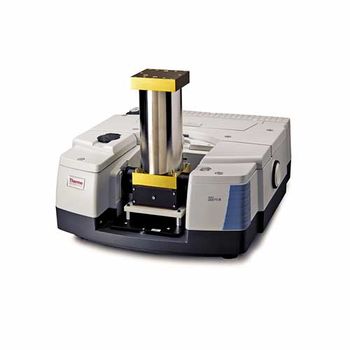
Combining a high precision FT-IR spectrometer with a long pathlength gas cell provides a powerful tool for analyzing trace levels of contaminants in air and other gas mixtures.
Spectroscopy
In this executive summary learn how to use isotope-ratio MS to determine the isotopic profile or “signature” of a material, and to hear about how this technique can be used in forensic investigations to measure a variety of materials, including drugs, explosives, currency, food, beverages, animal tissues like ivory, and human remains.
Spectroscopy
The development of an analytical method for ICP-OES is often seen as challenging, due to the large number of sample introduction components on the market, the possible parameters for sample introduction and plasma and measurement conditions, and finally, questions about how to interpret the data. This executive summary will demonstrate how to achieve your goal when developing a method: determining a set of parameters that ensure an accurate, precise and repeatable result on a daily basis.
Spectroscopy
Analysis of trace elements in petrochemical samples is routinely carried out for quality control and process monitoring using protocols set by organizations such as ASTM. However, analysis of these samples is often challenging due to the high matrix and potential for interferences. This executive summary will provide essential information on how to develop robust methods over coming these challenges and ensure excellent results when analyzing trace elements in petrochemicals samples by ICP-OES.
Spectroscopy
To learn more about Method development for ICP-OES, Spectroscopy Magazine talked with Matthew Cassap, Product Manager ICP-OES, AA, and Trace Elemental Analysis at Thermo Fisher Scientific.
Spectroscopy
Introducing a new single quadrupole ICP-MS to the range of trace elemental analysis solutions offered by Thermo Scientific. To learn more, Spectroscopy Magazine talked with Shona McSheehy-Ducos, ICP-MS Product Manager, Thermo Fisher Scientific in Bremen, Germany.
Application Notebook
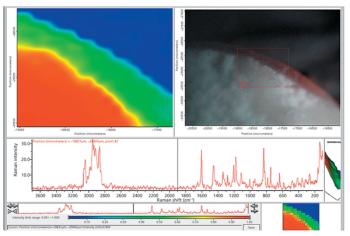
Infrared and Raman spectroscopy are critical analytical techniques in the pharmaceutical industry, used for the structural elucidation and characterization of organic materials such as new drug candidates, impurities, metabolites, and excipients.

Special Issues
Combining a high precision FT-IR spectrometer with a long pathlength gas cell provides a powerful tool for analyzing trace levels of contaminants in air and other gas mixtures (Figure 1). Two important applications of this are ensuring air quality and the purity of breathing oxygen and compressed air.