
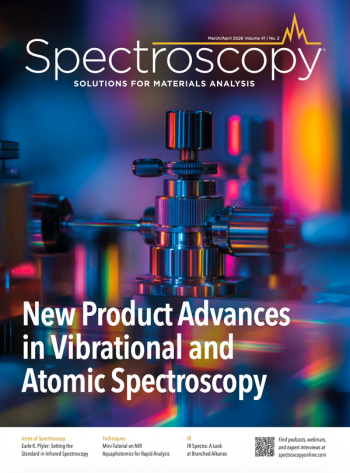
Click here to access the Spectroscopy March/April 2026 Europe PDF in an interactive format.
Click here to access the Spectroscopy March/April 2026 Europe PDF in an interactive format.

Spectroscopy is rapidly evolving into an integrated, intelligent ecosystem where advances in instrumentation, detectors, and optics—combined with chemometrics and artificial intelligence (AI)—are enabling higher sensitivity, miniaturization, multimodal analysis, and real-time decision-making across techniques ranging from ultraviolet–visible (UV–vis), infrared (IR), and Raman to inductively coupled plasma mass spectrometry (ICP-MS), laser-induced breakdown spectroscopy (LIBS), and X-ray fluorescence (XRF). Together, these developments are driving automation, predictive modeling, and the emergence of autonomous analytical laboratories with increasingly connected, cloud-enabled workflows.
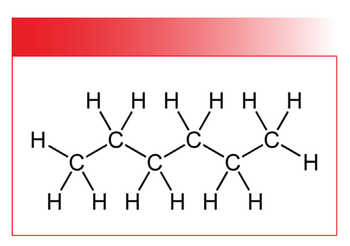
Brian Smith offers a review of the C-H stretching and bending vibrations of methyl and methylene groups and then discusses how to use infrared spectroscopy to determine some of the branch points found in alkanes.
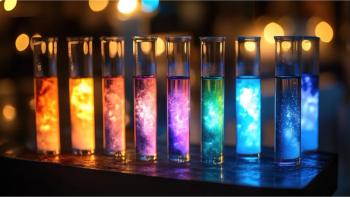
Near-infrared (NIR) spectroscopy combined with aquaphotomics shows potential for a rapid, non-invasive approach for detecting subtle biochemical changes in biofluids and agricultural products. By monitoring water molecular structures through water matrix coordinates (WAMACs) and visualizing water absorption spectrum patterns (WASPs) via aquagrams, researchers can identify disease biomarkers, food contaminants, and other analytes with high accuracy. This tutorial introduces the principles, practical workflow, and applications of NIR aquaphotomics for everyday laboratory use.
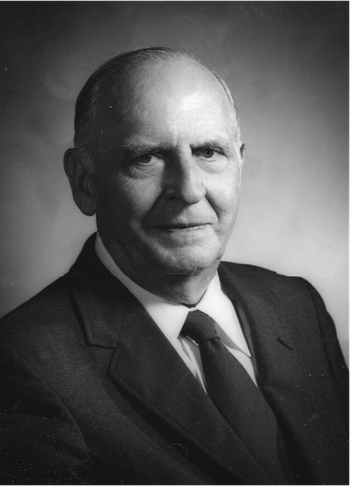
This Icons of Spectroscopy Series article features Infrared pioneer Earle Keith Plyler (1897–1976), who transformed molecular spectroscopy—building precision techniques, reference data, and instruments that set enduring methods and standards at the National Bureau of Standards (NBS, now NIST). As a teacher and mentor, he established a generation of leaders in molecular spectroscopy.