
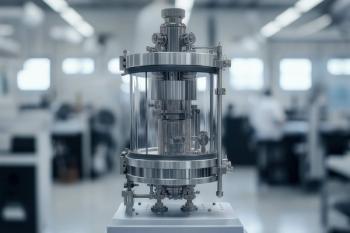
We critically review the qualification and validation approaches in the World Health Organization Technical Report Series (WHO TRS) 1019 Annex 3 and its applicability to spectrometer systems.
We critically review the qualification and validation approaches in the World Health Organization Technical Report Series (WHO TRS) 1019 Annex 3 and its applicability to spectrometer systems.

Spectroscopy recently asked three analytical scientists in the industry and in academia to share how mentorship has impacted their careers.

Spectroscopy sat down with Benjamin Manard, senior R&D staff and group leader for chemical and isotopic mass spectrometry at Oak Ridge National Laboratory, to discuss his career in the National Laboratory system, and his advice for scientists interested in following a similar path.

It has occurred to me that, in the 10+ years I have been writing about molecular vibrations, I have never introduced my readers to its basic theory! I will rectify that now. Some of this is new material, and some will be review. Either way, it is important that all this material be covered in one place.
Seeking opportunities for career growth is important for early-career scientists to explore new skills, connect with mentors, and gain insights into the field. Professional societies and educational programs can be invaluable resources, providing mentorship, training, and networking opportunities that can accelerate career success in spectroscopy.

Because there is a different Raman signature for each of the polymorphs as well as the contaminants, Raman microscopy is an ideal tool for analyzing the structure of these materials as well as identifying possible contaminants that would also interfere with performance.

This month’s column evaluates the capability of inductively coupled plasma–mass spectrometry (ICP-MS) to reduce the impact of doubly charged rare-earth element (REE) interferences on the quantitation of the metalloids, arsenic (As), and selenium (Se) in water and biological matrices.
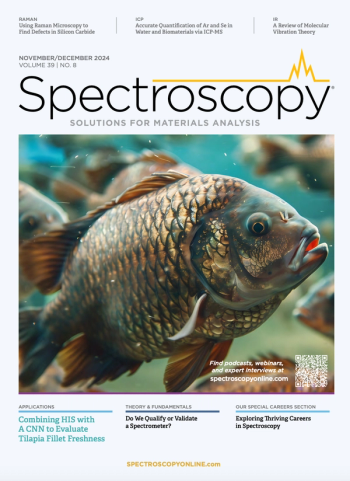
Click here to open the Spectroscopy November/December 2024 Europe issue, Volume 39, Number 8, in an interactive PDF format.
Click here to open the Spectroscopy November/December 2024 North America issue, Volume 39, Number 8, in an interactive PDF format.

A recent review article looks at how wetland ecosystems are being monitored using remote sensing technologies and imaging spectroscopy to better manage them.

The purpose of this work is to achieve rapid and nondestructive determination of tilapia fillets storage time associated with its freshness. Here, we investigated the potential of hyperspectral imaging (HSI) combined with a convolutional neural network (CNN) in the visible and near-infrared region (vis-NIR or VNIR, 397−1003 nm) and the shortwave near-infrared region (SWNIR or SWIR, 935−1720 nm) for determining tilapia fillets freshness.