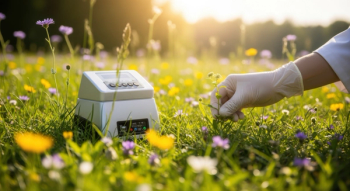
In the final part of our conversation with Brandon Boor of Purdue University, he explains the respiratory deposition model his team used to analyze indoor particle exposure.
A recent review article looks at how wetland ecosystems are being monitored using remote sensing technologies and imaging spectroscopy to better manage them.
Climate change is defined as long-term shifts in weather patterns in temperatures (1). Although it is true that the activity of the sun and volcanic eruptions can impact climate change, researchers have been more interested in investigating how human activities are influencing the planet’s climate (1). For example, burning fossil fuels is one human activity that is commonly believed to be negatively impacting climate change.
As a result, countries are collaborating globally to combat this problem. The Paris Climate Accords, an international treaty adopted in 2016, was one of these efforts. The goal of the Paris Climate Accords was to pursue efforts among nations to limit temperature increases and decrease greenhouse gas emissions (2). It requires nations to submit nationally determined contributions (NDCs), which are climate action plans that each nation implements to adapt to the impacts of climate change and contribute to mitigating global warming (2).
As part of global climate change mitigation strategies, researchers are also exploring ways to better manage aquatic and wetland ecosystems. Preserving these ecosystems is essential because they act as carbon sinks (3). This means that these ecosystems store a lot of carbon absorbed from the atmosphere, which helps the wetlands regulate the climate (4,5). The wetlands are also critical habitats for several plants and animals, so maintaining the overall health of the ecosystem is important in protecting biodiversity (4,5).
Recently, several spectroscopic studies examined how to better manage and preserve aquatic and wetland ecosystems. These studies were compiled and highlighted in a recent review article published in the journal Remote Sensing of Environment (3). In the review article, the research team, comprised of researchers from Arizona State University and California Institute of Technology, highlights the untapped potential of remote sensing technologies, specifically imaging spectroscopy, in managing aquatic and wetland ecosystems as part of global climate change mitigation strategies (3).
The study highlights imaging spectroscopy as an effective tool for improving carbon budget assessments in wet carbon ecosystems. Unlike traditional multispectral imaging, hyperspectral imaging spectrometers can capture fine-grained data across narrow spectral bands, enabling the detection of various environmental parameters critical to carbon sequestration (3). The researchers show through several published studies that remote imaging spectroscopy is good at assessing carbon stocks, community compositions, and habitat changes (3). The technology can also measure water column organic matter, turbidity, and other indicators that influence carbon fluxes (3).
However, these advanced tools are not widely accessible, limiting their application in critical wet carbon research. This gap is particularly pronounced in areas most vulnerable to climate change, where data is urgently needed to inform policy and conservation efforts. Li and team discuss these significant knowledge gaps. Although imaging spectroscopy has grown in popularity over the past decade, wet carbon habitats remain globally understudied.
The researchers highlighted papers in this field that met four criteria including the utilization of hyperspectral data, a focus on wet carbon ecosystems, publication in English, and were not solely dedicated to developing water optics algorithms (3). The review calls for greater accessibility to imaging spectroscopy platforms, including unmanned aerial vehicles (UAVs), airborne systems, and spaceborne sensors. The authors also propose fostering interdisciplinary collaborations to integrate imaging spectroscopy with ecological and biogeochemical models (3). Such efforts could pave the way for WC ecosystems to be included in climate policies more comprehensively (3).
By investing in imaging spectroscopy and prioritizing wet carbon ecosystems, nations can strengthen their NDCs and make significant strides in combating climate change (2,3). The review article shows that using imaging spectroscopy can help develop solutions to preserve ecosystems and mitigate any deleterious effects of climate change.
over 1 year ago
Do We Qualify or Validate a Spectrometer?over 1 year ago
Navigating a Career in National Laboratoriesover 1 year ago
The Big Review III: Molecular Vibration Theoryover 1 year ago
Raman Microscopy for Characterizing Defects in SiCalmost 2 years ago
Vol 39 No 8 Spectroscopy November/December 2024 Europe PDFalmost 2 years ago
Vol 39 No 8 Spectroscopy November/December 2024 North America PDF