The January 30–February 4 event is expected to feature more than 4,500 presentations across six technical areas and more than 1,400 exhibitors at the Moscone Center.
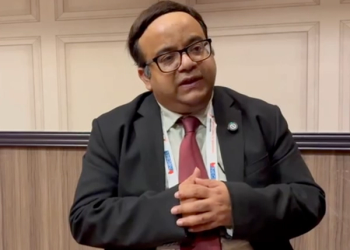
At SciX 2026, AES Mid-Career Award winner Siddhartha Das of the University of Maryland explained how all-atom simulations revealed flow reversal and “electroslippage” in brush-grafted nanochannels, and why the same ion–water physics matters for graphene desalination.
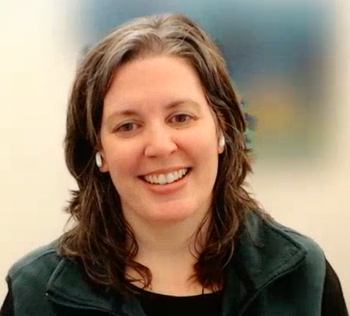
In this interview clip, Kristin L. Wustholz of William & Mary explains how her group judges the fidelity of its blinking-based classifications, why real artworks will call for classification libraries, and where the method fits alongside SERS.
Garth Simpson of Purdue University explains how patterned photobleaching and spatial Fourier transforms can turn a single-point measurement into a diffusion coefficient at every pixel in the field of view.
In the below Eastern Analytical Symposium (EAS) interview, Kristin Wustholz of the College of William & Mary explains how machine learning applied to fluorescence blinking can identify dyes from cultural heritage objects without relying on SERS or spectral data.
In this "Pathways in Spectroscopy" clip, Kevin Wilkinson explains why adaptability, critical evaluation of instruments, and data analysis skills matter more for graduate students than mastering any single technique.
Garth Simpson of Purdue University previews an upcoming chirality session at the Eastern Analytical Symposium and explains why the meeting’s blend of academic and industry researchers produces the most impactful science.
The Infrared and Raman Discussion Group’s 238th meeting on December 21 will feature the IRDG-Coblentz Lecture, two award presentations, and talks spanning clinical Raman, SERS, and ultrafast spectroscopy.