The 2026 AES Mid-Career Award recipient explains how molecular-scale simulations of polyelectrolyte brush-grafted nanochannels are revealing unexpected flow behavior.
The 2026 Ellis R. Lippincott Award recipient discusses the barriers to clinical adoption of photonic diagnostics and his vision for personalized optical digital twins.
Honored with a dedicated Spectrochimica Acta Part B award session at SciX 2026, De Giacomo explains why larger nanoparticles produce stronger LIBS signals and what that means for sensing design.
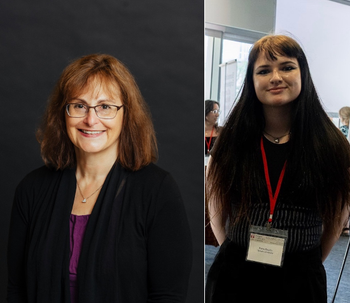
As part of our coverage of the SciX 2026 Conference, Nancy Pleshko and Petra Baylin of Temple University sat down with Spectroscopy to talk about their recent study, explaining how Fourier transform infrared (FT-IR) imaging of ultra-high weight molecular polyethylene (UHMWPE) implants permits oxidation evaluation throughout the sample yielding insight into failure.
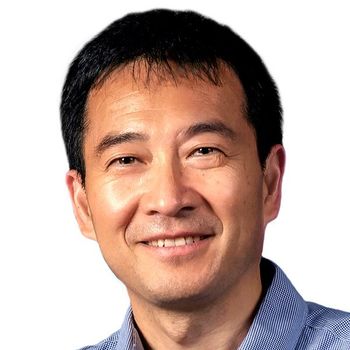
At the upcoming 2026 SciX Conference, Ji-Xin Cheng at Boston University will be recognized with the Charles Mann Award for Applied Raman Spectroscopy. Leading up to the conference, Cheng sat down with Spectroscopy to talk about the advancements being made in confocal Raman microscopy.
Wednesday's program at SciX 2026 kept returning to one question: can spectroscopy perform outside the controlled laboratory? Speakers took surface-enhanced Raman scattering (SERS), laser-induced breakdown spectroscopy (LIBS), mid-infrared photonics, chemometrics, and fluorescence excitation–emission matrix (EEM) spectroscopy into clinics, food plants, reactor coolant loops, brine fields, and drinking water supplies.
Eight FACSS award winners at SciX 2026, One LIBS trailblazer. Forty-eight questions. And not one of them is a softball. Award season in spectroscopy usually means polite applause, a plaque, and a photo. We're not completely interested only in the award sessions. The eight scientists honored at SciX 2026 in Sparks, Nevada, along with LIBS researcher Alessandro De Giacomo, are pushing Raman into operating rooms, flying LIBS on drones, reading chemistry off Mars, and tracing toxic metals downwind of industrial sites. Their work makes big claims. In the coming days, Spectroscopy will sit down with eight of these researchers and ask whether those claims hold up.
The interviews that follow won't just celebrate. They'll press on the gaps between simulation and experiment, between the lab bench and the clinic, and between a clever paper and an instrument someone will actually buy and use.