




Food and Beverage Analysis
Latest News
Advertisement
Latest Videos









Shorts

1:12
Establishing Global Credibility
a month ago
by
Kantha Shelke
Advertisement
More News

A candid plenary on the incentives shaping academic science was followed by an afternoon of talks spanning flowing SERS detection, historical textiles, maple syrup, pathogen immunoassays, and electrochemical Raman microscopy.

A new review article in Microchimica Acta finds that smartphone-based optical and spectroscopic sensors show strong potential to decentralize food safety testing across contaminants like pesticides, heavy metals, and pathogens.

A new deep-learning framework that was recently developed improves the accuracy of near-infrared spectroscopy for non-destructively measuring internal quality traits.

An upcoming talk at the 2026 SciX Conference will focus on nanoplastic analysis to distinguish between plastic and non-plastic particles.

The Peter Griffiths Award, named for the legendary infrared spectroscopist, recognizes the best paper published annually in Applied Spectroscopy Practica. Its inaugural recipients, Sara Fraser-Miller and coauthors, will be honored at SciX 2026, and the journal is now accepting 2026 submissions for the third award.
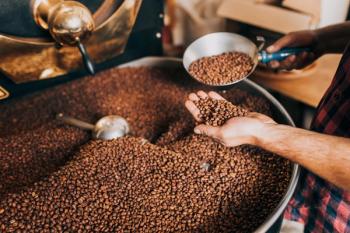
An upcoming poster presentation set to take place at the American Chemical Society (ACS) Fall 2026 Meeting will explore how spectroscopy is being used to distinguish different roasted coffee types.

Webcasts
Webinar Date/Time: Tue, Sep 8, 2026 2:00 PM CEST (8:00 AM EDT)

Handheld spectroscopy tools are being used to identify food fraud.

A new review in Food Physics finds that combining near-infrared spectroscopy with machine learning is transforming food quality testing across sectors like meat, dairy, and produce.

Webcasts
Webinar Date/Time: Mon, Jun 29, 2026 11:00 AM EDT

A recent study presented a reagent-free FT-IR-based spectroscopic method that detects melamine adulteration in milk powder at concentrations as low as 0.46 parts per million.

Spectroscopy is playing an increasingly important role in detecting adulteration in food products. We highlight some of the recent research on this topic in this Q&A.
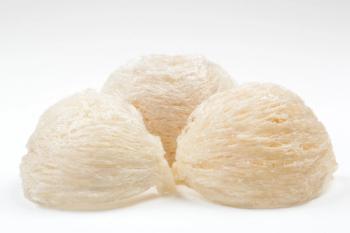
Researchers at the National University of Singapore have demonstrated that widely used spectroscopic methods for detecting adulteration in edible bird's nest products are based on a false assumption — that genuine product has a uniform chemical signature.

In the second part of our interview with José Miguel Hernández Hierro, an associate professor at the Universidad de Sevilla, he discusses the scalability challenges in this work, touching upon variables such as raw material variability, extraction efficiency, and storage stability.
Can grape pomace be a plant-based alternative to help improve wine stability and sensor quality? José Miguel Hernández-Hierro, who is an associate professor at the Universidad de Sevilla, explains why it might.

Webcasts
Webinar Date/Time: Thu, Apr 16, 2026 11:00 AM EDT

In this overview, we explore how spectroscopy is advancing the agriculture industry.
Advertisement
Advertisement
Trending on Spectroscopy Online
1
Best of the Week: Top Content in Spectroscopy, Quantitative Raman Spectroscopy
2
IRDG Christmas Meeting to Spotlight Biomedical Vibrational Spectroscopy in London
3
Thermo Fisher Introduces Benchtop Spark-OES Analyzer for Routine Metals Quality Control
4
Quantitative Raman Spectroscopy and the Unsolved Puzzle of Spectral Interpretation
5