



A recent study from the Journal of Medicinal Chemistry examined how nuclear magnetic resonance (NMR) spectroscopy is being used in drug discovery.
A recent study from the Journal of Medicinal Chemistry examined how nuclear magnetic resonance (NMR) spectroscopy is being used in drug discovery.
Spectroscopy sat down with Lauren Marbella of Columbia University to discuss her research in lithium metal battery technology.

Spectroscopic analytical techniques are crucial for the analysis of environmental samples. This review emphasizes the latest advancements in several key spectroscopic methods, including atomic, vibrational, molecular, electronic, and X-ray techniques. The applications of these analytical methods in detecting contaminants and other environmental applications are thoroughly discussed.

Scientists from Tamil Nadu, India recently developed a new fluorescence-based chemosensor for selectively detecting trivalent chromium (Cr3+) ions.
A new study examined protein peptide deformylase (PDF) inhibitors and how they could be used as effective treatments against bacterial infections.

A new study presents a recent advancement in nuclear magnetic resonance (NMR) spectroscopy.

Here are the top five articles that the editors of Spectroscopy published this week.
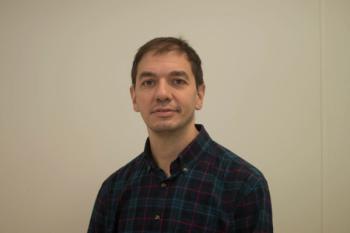
This article highlights the use of nuclear magnetic resonance (NMR) spectroscopy to characterize biomarkers of metabolic syndrome at different stages of progression.

In a recent study, spectroscopy-based detection protocols were used to detect Covid-19.

A recent study uses nuclear magnetic resonance (NMR) to analyze carbonaceous matter (CM) in Archean rocks, revealing new insights into the formation of life on Earth.
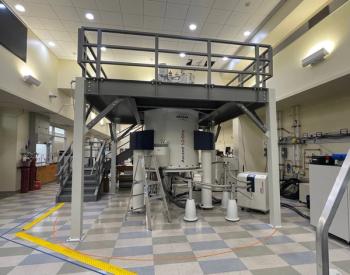
This is the first 1.2 gigahertz nuclear magnetic resonance spectroscopy system in the United States; eight are currently installed in Europe.

Detecting nitroaromatic compounds is essential to preserve the environment. A recent study out of China saw the development of new conjugated porous polymers (CPPs) that could improve detection of these volatile compounds.

High-resolution magnetic angle spinning nuclear magnetic resonance (HRMAS NMR) spectroscopy in particular can be applied to nonconventional solvents, helping to obtain information about protein crystal structures while also adhering to green analytical chemistry tenets.
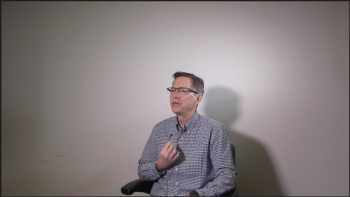
At the Eastern Analytical Symposium (EAS) in Plainsboro, New Jersey, Spectroscopy sat down with Robert Kennedy to discuss his research and career in analytical chemistry.

Professor Mary J. Wirth, W. Brooks Fortune Distinguished Professor Emerita at Purdue University, has been named the winner of the 2023 EAS Award for Outstanding Achievements in Separation Science.

A review of exponential signal models with machine learning in nuclear magnetic resonance (NMR) spectroscopy is discussed here.

This interview with Young Jong Lee highlights the work he and his team have done to reinvent solvent absorption compensation (SAC), and the potential it has across multiple forms of spectroscopy.

The development of a new benzothiazole azo dye sensor (BTS) highlights the importance of interdisciplinary research in materials chemistry and analytical chemistry for designing and synthesizing new materials with potential applications in chemical sensing and environmental monitoring.

Robert Tycko received the 2023 Pittsburgh Spectroscopy Award for his contributions in the field of spectroscopy. He was recognized at Pittcon 2023, which took place in Philadelphia, Pennsylvania.

In the past 20 years, spectrometers have shrunk dramatically in size, and this shrinking has been achieved with only modest performance reductions in sampling versatility, spectral range, spectral resolution, and signal-to-noise.

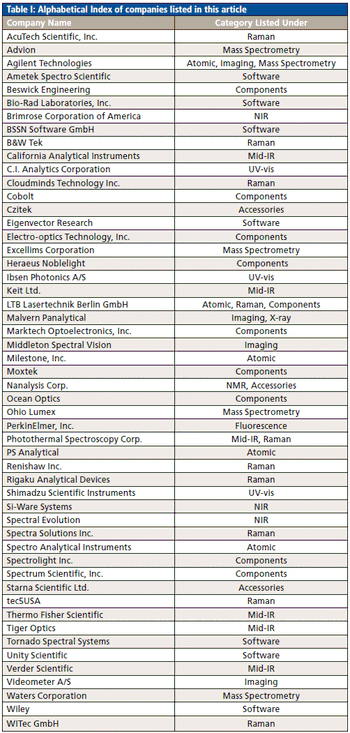
Our annual review of new products for atomic and molecular spectroscopy, including details by category and highlights of overarching trends.
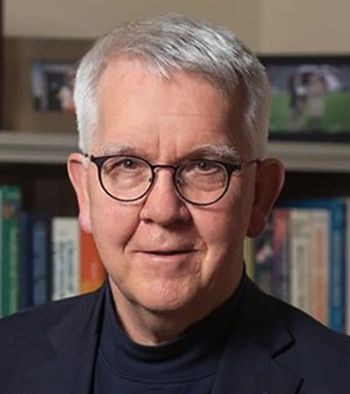
Paul Bohn, the Arthur J. Schmitt Professor of Chemical and Biomolecular Engineering at the University of Notre Dame, is the 2022 recipient of the Society for Electroanalytical Chemistry (SEAC) Charles N. Reilley Award.
Spectroscopy
Our annual review of products introduced at Pittcon or during the previous year

Spectroscopy interviewed Monique Chanhuot (Ecole Normale Sup?rieure, Paris, France) about her recent work using chiral liquid crystals in NMR to track changes in alanine chirality driven by alanine racemase. The hope is that, in the future, elucidations of the enzyme activity may enable the development of inhibitors and new antibiotics.

An interview with Charles Wilkins, the winner of the 2013 American Chemical Society Division of Analytical Chemistry Award in Chemical Instrumentation, sponsored by the Dow Chemical Company.