
Portable and Handheld Spectroscopy

Latest News


i1-747048-1408610423587.jpg

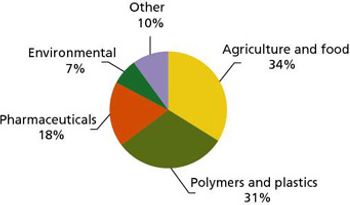
Major technological advances have allowed the market for handheld and portable Fourier-transform infrared (FT-IR) spectroscopy to develop almost overnight. Demand from a variety of industries and applications is continuing to take shape, and many major vendors in the market have taken note and made sure to grab themselves a major stake in this fast growing area.

i4-726049-1408618203129.jpg

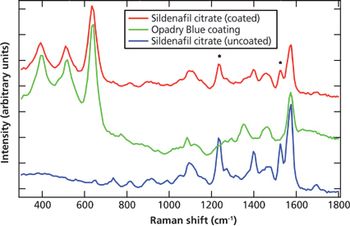
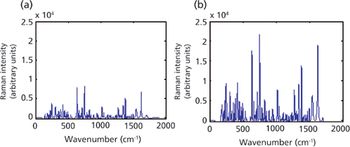
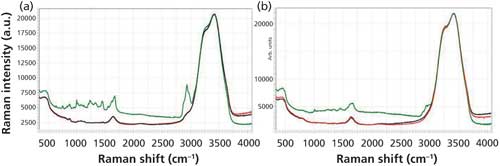
Raman spectroscopy offers a rapid, simple, and nondestructive technique for the identification of counterfeit medicines. The advantages of handheld Raman spectroscopy are that it is easy to use by unskilled personnel and it can identify a test pharmaceutical product on the spot, whether the product is in solid or liquid form. However, these instruments can operate only in reflection mode, and the Raman activity of a sample is often masked by fluorescent species in the sample, especially when the analysis is made in reflection mode. The objective of this work was to compare the use of a handheld and laboratory-based Raman instruments for authentication of pharmaceutical products obtained from the world market.

i1-701220-1408632285932.jpg

Demand for portable and handheld near infrared (NIR) instruments has exploded over the past several years, mirroring trends in other handheld spectroscopy techniques.

i1-665765-1408639347993.jpg

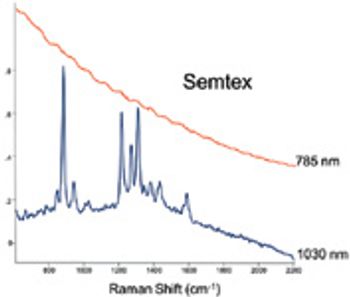
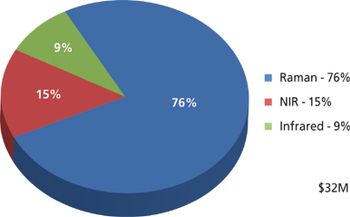
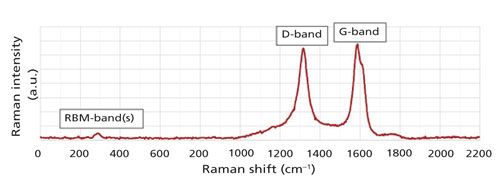
Raman spectroscopy in general, and specifically, handheld and portable Raman, has developed very rapidly over the past decade due to technological developments that have unleashed the advantages of the technique. Portable/handheld Raman spectroscopy has gone from an insignificant market to the largest portable molecular spectroscopy technique in just a few years.

i4-664104-1416909779662.gif

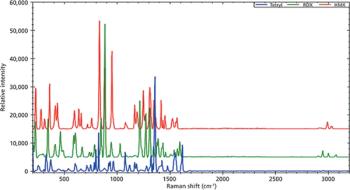
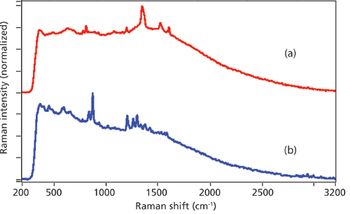
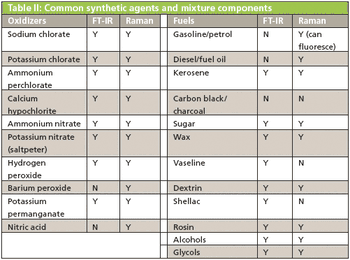
Interest in vibrational spectroscopy, principally Raman and mid-IR (FT-IR) continues to increase as these analytical techniques may be applied to a wide variety of fields, including the safety/security sector. Raman and FT-IR have seen rapid deployment for use in homeland security applications, largely due to the high chemical specificity which allows robust identification. In this article, we discuss the application of the latest portable, rugged Raman and FT-IR handhelds, enabling robust identification of explosives, TICs, TIMs, and narcotics in the field. This article introduces explosives, their different classes, and the applicability of Raman and FT-IR spectroscopy to identify their components (commercial, HMEs, and IEDs) or precursors.

i1-645428-1408636765337.jpg

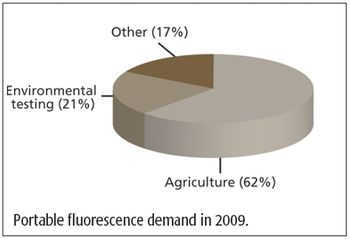
A small niche market within fluorescence spectroscopy is portable fluorometers. Primary applications are in the agricultural industry, but there is considerable potential elsewhere. The market landscape is small and fragmented, with no dominant leader, and significant potential for growth.

As portable instrumentation continues to find commercial success as viable alternative to traditional laboratory equipment, factors such as ruggedness, sensitivity, speed, and reliability become increasingly important. In this session sponsored by the Coblentz Society, five presentations will discuss handheld instrumentation for techniques including ion mobility spectrometry (IMS), energy dispersive X-ray fluorescence (EDXRF), laser-induced breakdown spectroscopy (LIBS), Raman and FT-IR spectroscopy, and UV, visible, and NIR spectroscopy.

i1-572068-1408670975649.jpg

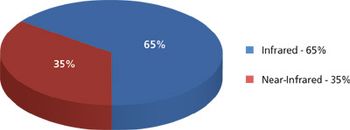
The handheld and portable Fourier-transform infrared (FT-IR) market is a very new and rapidly growing market thanks to the intersection of technological advancements and new demand. Relative to other portable analytical technologies, the range of applications for the technology is more diverse. Despite the rapid growth and potential for this market, however, only a handful of competitors currently dominate the market.

i1-525675-1408668224521.jpg

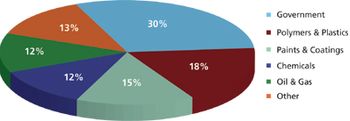
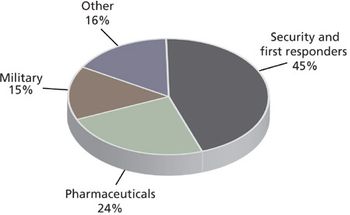
The continuing pace of technological advancements in scientific instruments has recently led to a wide range of commercially viable portable and handheld instruments, and the Raman spectroscopy market is no exception. While security applications have received much of the early attention in relation to handheld instruments, other applications are beginning to replace demand from the security markets.

i1-493131-1408675675863.jpg

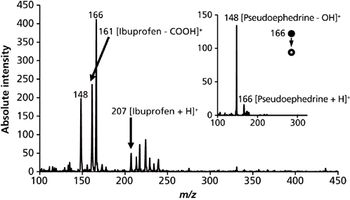
The concept of portable mass spectrometry has been around for some time, but the realization of such technology has been largely limited until very recently. More than ever before, recent technological advances now make smaller, lighter, and more effective mass spectrometers possible. Such advances will lend themselves to a growing spectrum of applications as well.

i1_t-443488-1408676189003.gif

Near infrared (NIR) spectroscopy has become one of the more widely utilized analytical methods for both laboratory and process applications as a result of its ability to characterize a wide range of compounds, and the relative ease with which samples can be analyzed. These characteristics are now leading to the rise of the market for handheld and portable NIR instruments.

i1-406625-1417781358161.jpg

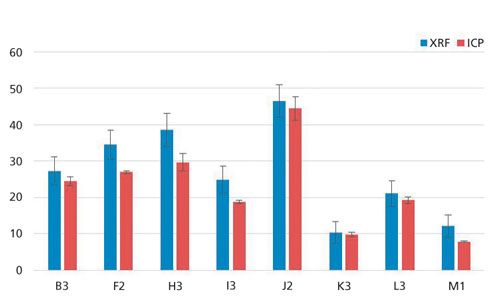
Although X-ray fluorescence spectroscopy (XRF) has long been a tool of the laboratory, the past few years have seen a meteoric rise in the use of handheld XRF units for applications in which a portable unit can increase the speed and efficiency of the testing process. Some years ago, handheld instruments required the use of radioactive materials to provide a source of X-rays, but the development of low-power X-ray tubes has enabled this market to flourish by removing any apprehension about using regulated materials.

The authors review the science and technology of the latest generation of hand-held x-ray spectrometers and their analytical capabilities in alloy analysis.