Jürgen Popp, winner of this year’s Ellis R. Lippincott Award, discusses the regulatory, cost, and workflow hurdles of moving Raman spectroscopy into hospitals.
A Q&A interview from SciX explored a porous-particle Raman platform became an alternative to SERS, and why AI could unlock biochemical meaning in vibrational spectra.
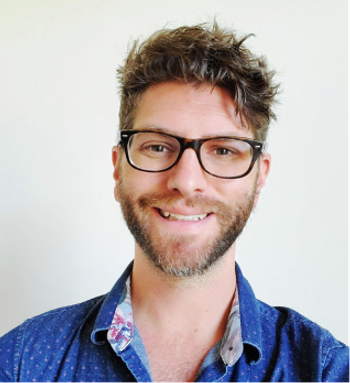
Jay Kitt, who was Spectroscopy’s 2026
Below is a text transcript of our conversation with Kitt at SciX.
My talk on Thursday covered the decision-making process that I went through in order to try to make this decision of going industry or academia. The whole thing kind of started when I had a conversation with my stepson. He had a science fair project that was upcoming, and he told me that he wanted to shoot off elephant toothpaste. I don't know if you're familiar with elephant toothpaste, but basically, it's hydrogen peroxide, soap, and a catalyst, and it blasts out of a bottle. Kind of like a really fancy version of a baking soda and vinegar volcano.
Anyway, he went to his teacher and told his teacher he wanted to do this, and went to one of his friend's parents, the partner he was working with, and they all said no. They're like, "We're not going to let you just blast this stuff off all over the place. That's not a good science fair project."
And he came to me probably the night before the project was due. He's trying to come up with some version of the project that he can actually do. And I said to him, "Well, I mean, let's be honest. We both know that you really just want to play with elephant toothpaste and make a giant mess, right?" He was a little bit timid about it for a minute, but eventually comes out with, "Well, yeah, pretty much. That's what I want to do." I asked him if that’s what he told his teacher, and he said yes.
I told them that his problem was that he pitched it to her the wrong way. And so then I proceeded to tell him something that I've gotten very good at in academic science, which is dressing up a project to make it fit the need. What he decided to do was make it all about rocket motors, and the elephant toothpaste was a model propellant.
Anyway, he ended up getting the project through, but it made me think a lot about what I do and what we do in science generally. My talk was basically about how it bothers me in a big way that academic science has become a lot about dressing your project up to make it fit your program officer's need or somebody's niche problem that they want you to work on.
I cover a little bit of history of that, how academic science started out all about academic freedom, and it's become a system where we write within boxes instead of hunting out the big idea projects that we want to do. And then propose a couple of solutions, but the solutions are the hard part.
The truth is that we didn't go about pursuing signal enhancement at all. It kind of fell out of the work that we were doing.
Initially, a student just before me had started doing work in looking at chromatographic processes inside of porous silica particles. We discovered you could measure inside of these particles using a
We didn't really start thinking about it as an alternative to surface-enhanced Raman spectroscopy (SERS) until a few years later. I was doing some work where we formed hybrid bilayer interfaces, so a C18 lower leaflet and a phospholipid upper leaflet in the particles. We were using that to measure the lipophilicity of small molecules, and I started thinking about pushing that into biochemistry. Where could we use this as a platform? We did some work with antibodies. We also did some work with peptides inside of particles, and it wasn't until after that biology work for about 10 years that another student in Joel's group came along and was like, "We're using this as a platform. We should probably start pitching it that way."
And so, we did. We didn't get a paper out talking about an alternative to SERS until 10 years after we'd started doing the work. The paper addresses all of those things, and I think that's really cool.
The question was interesting to me because it was high-impact biology, and one of the things that I've become fascinated with is using Raman spectroscopy for interpretation of biochemistry. It's one of those subjects that we've tried to do, but it's really challenging.
I pitched the project to Joel, and I told him that I wanted to look at this interaction between cardiolipin and cytochrome c. This normally occurs in mitochondrial membranes, and I was hoping that we'd be able to see something specific about the mechanism: what goes on with this protein when it interacts with cardiolipin, why does it induce pore formation and eventually lead to apoptosis?
And Joel kind of looked at me and explained that that was a bit of a pie-in-the-sky idea, and "I don't think we're going to do it." And I was like, "Oh, man. Okay, fine."
But I was pretty committed to the cause at that point. I don't know exactly why. It was just a fascinating topic to me. And Joel just got really busy with grant writing one day, and I came by his office, and I was ordering some reagents for another experiment and told him, "I'm going to order that cytochrome c."
I ordered it, and I actually did the first experiments to completion, showing that it worked before I ever approached him with the fact that I'd done it at all. When I did bring him the result, he was really amped about it, and we had a funny conversation about it. It turns out that when he was a graduate student, he had the same sort of thing one weekend. He carried out an experiment that he'd been told not to do, and the whole thing turned out to be really fun.
The question, though, was just that I thought it was cool, I thought it was high impact, and I thought it was something we don't do in vibrational spectroscopy very much.
The interesting thing about that is that gramicidin's not a true pore former, so to speak. It forms these little ion channels, and it's an interaction between two of these peptides that span the membrane. But you might imagine that the interactions are similar between other peptides of that sort.
What the number of lipids tells you is basically how big the shell is that surrounds the peptide when it's in the bilayer and how much of the bilayer it's disrupting. One of the things that people have observed about pore formers is that there's a threshold effect, right? They'll exist in the bilayer for some period of time before eventually cause that whole thing to collapse and fall apart.
So, the thing that I think is cool about getting quantitative with the spectroscopy like we did is that now you have a number. You know what that shell looks like. You know how big it is. And with that number, you might be able to get a sense of how much of that peptide might need to be in the bilayer in order for this collapse thing to happen. So, you might control the dimensionality to address that.
Just getting a quantitative measure of how many lipids you're disrupting was a fascinating thing to me. One of the things that Joel taught me was to really dig in and see what numbers you can pull out of these things. How quantitative can you really get? It was pretty fun to get down to a number where you just truly know what's happening there.
It's going really well. I'm enjoying it a lot.
How did PFAS specifically end up being the thing that I look at? Well, Marc Porter was working on PFAS. He dragged me into the fold, and he was interested in looking at PFAS using Raman spectroscopy. Currently at Litmus, we're not using Raman spectroscopy; we're using fluorescence. But we had some ideas about it, and I started working with him, and it took us a little while to get funding going and everything. But now that we're after it, I'm really enjoying the work.
I think it's really fun to see a project that I'm working on in a real-world application. I love all of the ponderings about science and all of that stuff, but it's fun and it's been a unique challenge to try to design something that is actually being used in the field.
The second thing that I would say about it is that I was really worried about losing the teaching aspect of being in academia. It turns out that I'm working with two great scientists. One's a doctoral-level guy. One has just finished his BS in chemical engineering, and I'm doing more mentoring now than I was working in the chemistry department, and I'm really enjoying it.
This is one I'm super excited about, and it harkens back to everything that I've talked about in biochemistry and using Raman spectroscopy to look at biochemistry. And not just in the way that we've done it in the past.
I remember going to a talk at SciX maybe 10 years ago now, and I think it was Zhijin Chang's group. At the time, he was at Purdue. They were developing stimulated Raman spectroscopy methods for determining cancer borders, and they were trying to do it during the surgery. So, you could take a probe and just see if you'd actually hit that cancer border instead of having to send sections out to the pathology lab, and they were being quite successful.
And I remember looking at the data and thinking to myself that, well, you know, if you can tell healthy tissue from cancerous tissue, and you can tell that with the vibrational spectrum, that means that the vibrational spectrum is telling you something about the mechanism or what's going on with those cells. And to me, I was just like, "Why aren't we looking at this?"
And when I got further into doing spectroscopy of biochemistry, I discovered that the biggest challenge was just vast review papers in the literature with really challenging interpretation. What does this amide mode mean? How are they interacting with phospholipids in a system? There are all these different things with DNA structure and how hydrogen bonding impacts the vibrational modes and all of that kind of stuff. It's a challenge that I've always really been interested in and really wanted to pursue.
I think that my generation is at a point where the instrumentation is really nailed down. We've got good equipment, good spectrometers, and we can make the measurements. But what's unique is that over the past several years, we've seen the development of machine learning and AI. I think that this allows huge opportunities for not only parsing literature in order to do a better job of spectral interpretation, but maybe carrying out correlation-type analyses in order to figure out what specific band changes mean. Therefore, I think that we're really uniquely poised to take Raman spectroscopy in a direction that could be really powerful.
This interview was lightly edited for clarity.