Register Now: Advances in Spectroscopy for Pharma and Biopharmaceutical Analysis Symposium
|Articles|December 1, 2012

Spectroscopy

  • Spectroscopy-12-01-2012
  • Volume 27
  • Issue 12

CETAC Technologies

CETAC Technologies

Company Description

CETAC Technologies is a world leader in sample handling and sample introduction equipment for elemental analysis. CETAC's spectroscopy and automation groups develop, manufacture, and market a family of products and services for customers around the world, for use in every industry where rapid and accurate determination of trace element concentrations is required. CETAC Automation has developed over 50 OEM partnerships bringing customer-driven products into the marketplace.

Chief Spectroscopic Techniques Supported

  • ICP mass spectrometry (ICP-MS)

  • Inductively coupled plasma (ICP-OES and ICP-AES)

  • Mercury analysis

  • Atomic absorption

  • Atomic fluorescence

  • Laser ablation

  • LC–MS

  • HPLC

Markets Served

Major industrial segments benefiting from CETAC's product-based solutions include semiconductor manufacturing, environmental analysis, and petrochemical manufacturing. Customers include instrument manufacturers, government, academia, and private laboratories.

Major Products/Services

Automation: Autosamplers and micro-autosamplers; sample preparation and dilution; ASXpress Plus rapid sample introduction system; anti-contamination enclosures

Laser Ablation: In partnership with Photon Machines Inc., CETAC provides Nd:YAG laser ablation systems (213 nm and 266 nm); Excimer laser ablation systems (193 nm); DigiLaz laser ablation software; general purpose and specialized sample cells

Nebulizers and Sample Preparation: Ultrasonic nebulizers; membrane desolvators; hydride generation; sub-boiling distillation system

Mercury Analysis: Stand-alone CVAAS and CVAFS systems; Autodilution; QuickTrace mercury analysis software

Oem Automation Services: Custom autosampler design; pick-and-place; sample preparation and dilution; temperature-controlled racks; Fraction collection

Peripheral Devices and Supplies

Facility

CETAC's world headquarters in Omaha, Nebraska has trace and ultra-trace laboratories, equipped with OEM spectrometers used for testing and method development. On-site manufacturing supports rapid prototyping and customization. A European office is located in Manchester, England. Partners and distributors serve customers in North and South America, Europe, Asia, Africa, and Australia.

CETAC Technologies

14306 Industrial Rd.

Omaha, NE 68144

TELEPHONE

(800) 369-2822

(402) 733-2829

FAX

(402) 733-5292

E-MAIL

sales@cetac.com

WEB SITE

www.cetac.com

NUMBER OF EMPLOYEES

US: 110

OUTSIDE US: 3

YEAR FOUNDED

1987

Articles in this issue

almost 14 years ago

Agilent Technologies

almost 14 years ago

EDAX Inc.

almost 14 years ago

Moxtek, Inc.

almost 14 years ago

Glass Expansion

almost 14 years ago

PANalytical, Inc.

almost 14 years ago

Shimadzu Scientific Instruments

almost 14 years ago

Rigaku Corporation

almost 14 years ago

Amptek, Inc

almost 14 years ago

Ocean Optics

almost 14 years ago

International Crystal Laboratories

Related to this article

Spectroscopy Top 10 DOI Articles of the Month (October 2026)
The following articles are the most accessed digital object identifier (DOI) manuscripts for Spectroscopy and LCGC International during the month of October 2026. Nine articles are individually ranked here by DOI page views; the seventh-highest entry (99 views) was recorded against the bare LCGC North America journal-level DOI rather than an individual article and is therefore not attributable to a single manuscript.
Mapping Molecular Mobility Pixel by Pixel
Garth Simpson of Purdue University explains how patterned photobleaching and spatial Fourier transforms can turn a single-point measurement into a diffusion coefficient at every pixel in the field of view.
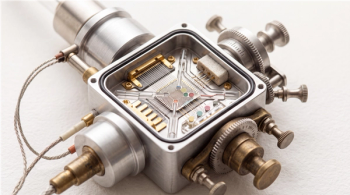
Optical and Electronic Instrument Components,  ©  ridwan -chronicles-stock.adobe.com
The updated and expanded 2026 edition of Spectroscopy's Instrument Components Terminology Guide defines the sources, detectors, optical and dispersive elements, sampling hardware, physical constants, and unit conversions used across UV-vis, NIR, IR, Raman, X-ray, and atomic spectroscopic instrumentation, with new terms reflecting component developments reported between 2022 and 2026.