At SciX, Jay Kitt describes the experiment he ran on his own that launched his cytochrome c research, and explains why putting a number on peptide–lipid interactions matters.
In the final part of our conversation with David Clases at the Winter Conference on Plasma Spectrochemistry, he reacts to winning both awards and offers his perspective on the key spectroscopic trends this year.
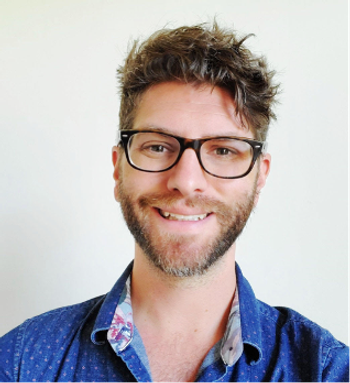
Part of the Winter Conference on Plasma Spectrochemistry program is dedicated to award winners, allowing them to deliver talks related to their research that was the basis for winning their award. At the Winter Conference on Plasma Spectrochemistry, David Clases, an associate professor at the University of Graz in Vienna, Austria, was recognized for two awards: the JAAS Prize and the Nu Emerging Pioneer Award.
In the final part of our conversation with Clases, he reacts to winning both awards and offers his perspective on the key spectroscopic trends this year.
Spectroscopy: What was your reaction to receiving both the JAAS Prize and the Nu Emerging Pioneer Award?
David Clases: I was very surprised that I received both, and I feel deeply honored. At the same time, I'd like to emphasize that this, of course, was a group effort. This is not just me. However, I'm very happy that we are able to spark excitement in the community, and I take it as a confirmation that we are heading in the right direction.
Also, I think what's important about it is you can see it from the names. It's the emerging scientists. This is something that is just being started. So, I think I take it as a milestone, and I really would like to push this further. And I think there are lots of opportunities and lots of possibilities in this.
Spectroscopy: Looking ahead to 2026, what are some major and emerging trends in spectroscopy heading into next year that experts should be paying attention to?
David Clases: Yeah, I think I already mentioned a few directions which might come up. But I think that hyphenated techniques will have their place. On the other hand, we have multimodal approaches, and these will enable us to look at questions which cannot be answered by just one modality. On the other hand, I think that teams will become more and more interdisciplinary, and we will see teams which consist of data scientists, geochemists, analytical chemists, engineers, and so on. I really hope that 2026 is a year where more communities will discover inductively coupled plasma–mass spectrometry (ICP-MS) as a very potential platform which can actually tackle pressing questions of our time.
This video clip is the third part of our conversation with Clases as part of our coverage of the Winter Conference on Plasma Spectrochemistry. To stay up to date on our coverage of the Winter Conference on Plasma Spectrochemistry, click