At SciX, Jay Kitt describes the experiment he ran on his own that launched his cytochrome c research, and explains why putting a number on peptide–lipid interactions matters.
Not all universities and colleges have the equipment people use in industry, which puts students at a disadvantage compared to those who can access and use these instruments.
Hands-on learning has some crucial benefits for students looking to enter the workforce. Having the opportunity to work with the
In this “
Spectroscopy: How important is access to modern instrumentation during a student's education, and how big is the gap between what universities offer and what professionals actually use in the field?
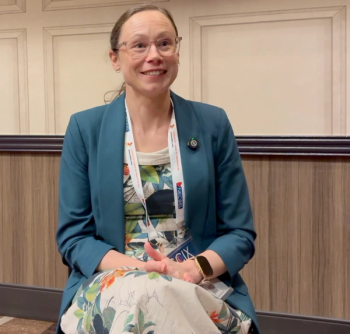
Mary Kate Donais: It's a great question, and I can answer from the perspective of teaching at a primarily undergraduate institution (PUI). At a primarily undergraduate institution, we do not have a huge budget, and we do not have a large number of students, so what we have in our teaching laboratories here is likely not going to be what you find at a big R1 university in which you're also teaching undergraduates. With that in mind, though, I think we've had a really great support from the college when I brought to the table that I thought we should have a Raman instrument. We had support for that when we needed to upgrade instruments because they're getting outdated, so we've been able to do that as well.
But all of it comes down to teaching them the fundamentals of the technique, so that they understand how it works, and providing them with opportunities to use those instruments as much as we can, but making sure that they realize the specific version of the instrument that they're using here is likely not going to be what they have when they go to work for an employer. It's probably going to be a different model, possibly a different company. So the specifics of what the software and the pull-down menu, and all of the steps are likely not going to be the same, but as long as they understand you want to be collecting a certain number of spectra to improve your signal to noise, these are the things to look for.
All of those basics absolutely transfer, and these basics give them the confidence to work more independently in the laboratory, and that is another thing that they are gaining by doing that laboratory work. We try to gradually increase the amount of independence that's expected of them in doing laboratory work, so earlier on in their first and second year courses, they're giving more detailed instructions for how to use the instruments, but they start with using instruments in their first year. And then gradually, we provide less and less specific instructions to the point that for my instrumental students, they're given what's called experiment guides, and they're just told prepare calibration solutions over this range and collect data and generate a calibration curve. They’re not told what to do specifically. And so gradually, that bigger amount of what they have to think about themselves and then go and collect the data on the instrument is really valuable. Finally, all of our majors have to do research to graduate, so that's the ultimate in that, that independence, um, and but all of that is the hands on, as much as possible, integrated throughout their, their four years at the college.
This is the fourth part of our conversation with Donais. She and her team published an