Register Now: Advances in Spectroscopy for Pharma and Biopharmaceutical Analysis Symposium
|Webcasts|December 9, 2021

Enhancing Research and Teaching with Direct Mercury Analysis

Author(s)Milestone Inc

Thursday, December 9, 2021 at 2pm EST | 1pm CST| 11am PST Learn how Direct Mercury Analysis provides a fast and accurate alternative to other common techniques for mercury determinations and how it can be used as an instrumental technique for teaching in academic laboratories and for performing high-impact environmental research.

Register Free: https://www.spectroscopyonline.com/spec_w/mercury

Event Overview:

Mercury is the focus of many environmental studies due to its toxicological effects. Unfortunately, most common analytical methods for mercury determination require long, and often tedious, sample preparation steps prior to analysis. This can have a significant impact on amount of time that researchers and students have available to collect samples, conduct experiments, and analyze data.

In this webinar, you will learn how Direct Mercury Analysis provides a fast and accurate alternative for mercury determinations and how it can be used as an instrumental technique for teaching in academic laboratories and for performing high-impact environmental research.

Key Learning Objectives:

  • Understand the principle of operation behind Direct Mercury Analysis and how it compares with more traditional techniques
  • See how total mercury can be determined in soil, water, and fish samples in as little as 5 minutes
  • Discover how Direct Mercury Analysis simplifies your analytical process so you can focus on your data
  • See how other universities have incorporated Direct Mercury Analysis as part of their research and teaching programs

Who Should Attend:

  • Professor / Associate Professor / Assistant Professor
  • Lecturer / Instructor
  • Instrumental Lab Manager
  • Graduate Student / Post-doc

Other researchers currently performing or interested in learning more about environmental mercury analysis

Speakers

Dr. Johan Varekamp
Harold T Stearns Professor of Earth Sciences, emeritus
Wesleyan University

Michael Coppola
Product Manager
Milestone, Inc.

Register Free:https://www.spectroscopyonline.com/spec_w/mercury


Related to this article

A robotic arm in an automated agricultural setting, carefully processing a conveyer belt with tomatoes and leafy greens for food production. | Image Credit: © Donnangelo - stock.adobe.com
Croatian researchers outline how optical emission spectroscopy (OES) can track reactive species and plasma parameters in real time, giving processors a path to move cold plasma treatments from the laboratory to production lines.
Spectroscopy Top 10 DOI Articles of the Month (October 2026)
The following articles are the most accessed digital object identifier (DOI) manuscripts for Spectroscopy and LCGC International during the month of October 2026. Nine articles are individually ranked here by DOI page views; the seventh-highest entry (99 views) was recorded against the bare LCGC North America journal-level DOI rather than an individual article and is therefore not attributable to a single manuscript.
Mapping Molecular Mobility Pixel by Pixel
Garth Simpson of Purdue University explains how patterned photobleaching and spatial Fourier transforms can turn a single-point measurement into a diffusion coefficient at every pixel in the field of view.
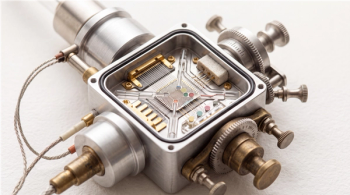
Optical and Electronic Instrument Components,  ©  ridwan -chronicles-stock.adobe.com
The updated and expanded 2026 edition of Spectroscopy's Instrument Components Terminology Guide defines the sources, detectors, optical and dispersive elements, sampling hardware, physical constants, and unit conversions used across UV-vis, NIR, IR, Raman, X-ray, and atomic spectroscopic instrumentation, with new terms reflecting component developments reported between 2022 and 2026.