SPEC PerkinElmer 11.10
|Webcasts|December 16, 2021

Lab Hacks and Best Practices for Optimizing Organic Analytical Analysis

Thursday, December 16, 2021 at 2pm EST | 1pm CST | 11am PST Spectroscopy and chromatography are key analytical techniques in the organic laboratory. Understanding the ways to optimize organic analysis can often be the key to accurate results. In this webcast, the concepts for maximizing chromatography efficiency will be examined along with the helpful lab hacks and best practices to get the most out of organic laboratory analyses.

Register Free: https://www.chromatographyonline.com/lcgc/contamination

Event Overview:

Chromatography and spectroscopy are the most common analytical techniques in the organic laboratory. By understanding the operation and chemistry involved in these processes, the analyst can optimize their analyses and eliminate error. This presentation will explore ways to improve organic analyses with information regarding best practices and lab hacks to aid in the organic laboratory.

Key Learning Objectives:

  • Understand the function and interaction of common organic analysis technique such as spectroscopy and chromatography
  • Review best practices for common laboratory sample preparation and dilution techniques used in organic sample preparation to reduce contamination and error
  • Learn about laboratory hacks and practices to help analysts streamline and improve their sample preparation, standard use, and sample analysis.

Who Should Attend:

  • Chromatographers, mass spectroscopists, and analytical chemists working with GC, GC–MS, HPLC, LC–MS, spectrophotometry, and other organic techniques
  • Analysts working in organic analytical laboratory

Speakers

Patricia Atkins
Senior Applications Scientist
Spex, an Antylia Scientific company

Patricia Atkins is a Senior Applications Scientist. She is a graduate of Rutgers University in NJ and was laboratory supervisor for Ciba Specialty Chemicals in the Water Treatment Division. Patricia later accepted a position conducting research and managing an air pollution research group within Rutgers University’s Civil & Environmental Engineering Department. In 2008, Patricia joined Spex as a senior application scientist in our certified reference material’s division and spends her time researching industry trends and developing new reference materials. Patricia has been involved with many industry focused advisory & regulatory groups including AOAC, ASTM, ACIL, NACRW and the Emerald Conference. She is a frequent presenter and speaker at numerous conference including NACRW, NEMC, Pittcon and AOAC and published author with her work appearing in various journals and trade publications including Spectroscopy, LCGC and Cannabis Science and Technology where she is a columnist for analytical issues in cannabis testing.

Register Free: https://www.chromatographyonline.com/lcgc/contamination



Related to this article

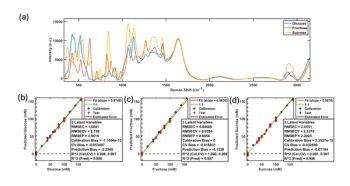
Monitoring Sugar Consumption and Ethanol Production During Yeast Fermentation Using a Raman Plate Reader and Multivariate Analysis
This column shows that a Raman plate reader paired with partial least squares regression can simultaneously quantify glucose, fructose, sucrose, and ethanol in yeast fermentation samples, using turbidity-matched calibration standards to correct for yeast-induced turbidity, and offers a rapid, label-free, high-throughput method for tracking sugar consumption and ethanol production in strain screening, media optimization, and process development.
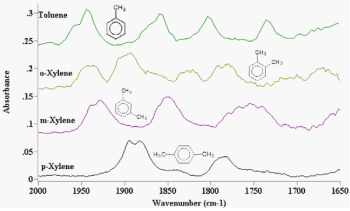
Highly Substituted Benzene Rings—The Rest of the Story II: Spectra
This column, the second installment on highly substituted benzene rings, shows that tri- and tetra-substituted substitution patterns can be distinguished by whether the ring bending peak is present and by the position of the in-phase aryl C-H wagging peak, which shifts according to how many adjacent hydrogens the ring carries.
Healthcare administrator reviewing an insurance policy schedule with a stethoscope on a clipboard, health insurance coverage, medical underwriting, prior authorization, and patient claims processing. | Image Credit: Joi_studio - stock.adobe.com
In a SciX interview, Marc Porter covered a lot of ground, from a student-driven pivot into immunoassays to a baseball analogy for Stokes and anti-Stokes scattering, and shares the open questions he is still chasing.
Ingots of pure copper or pink gold on a black background. | Image Credit: Phawat - stock.adobe.com
At SciX, Kevin Wilkinson of the Universite de Montreal explains how faster data acquisition and new software have cut analysis time and how a particle’s chemical composition can link arsenic-bearing emissions back to a copper refinery’s processes.
Spectral Frontiers: Seeing the Unseeable Microspectroscopy
Microspectroscopy, the marriage of spectroscopic chemical identification with microscopic spatial resolution, has advanced from Perkin-Elmer's first commercial infrared microspectrometer in 1953 to today's nanoscale AFM-IR probes, synchrotron-brightness infrared beamlines, and compact hyperspectral tissue imaging devices being developed for AI-assisted cancer detection.