SPEC PerkinElmer 11.10
|Articles|December 1, 2009

Spectroscopy

  • Spectroscopy-12-01-2009
  • Volume 24
  • Issue 12

Looking Forward with Optimism

Author(s)David Walsh

It has certainly been a long 12 months. With the economic recession, the housing crisis, and high unemployment dominating the news and impacting the spectroscopy marketplace in 2009, it is easy to see why many readers will not be sorry to see the end of 2009, and why they will be all too happy to welcome in 2010.

It has certainly been a long 12 months. With the economic recession, the housing crisis, and high unemployment dominating the news and impacting the spectroscopy marketplace in 2009, it is easy to see why many readers will not be sorry to see the end of 2009, and why they will be all too happy to welcome in 2010.

David Walsh

However, if the holidays are a time for looking forward with optimism, then it must also be said that even in these difficult economic times, there is ample reason to feel hopeful. A recent market analysis from Strategic Directions International points to high single-digit growth in all market segments in 2010, with atomic spectroscopy, molecular spectroscopy, and mass spectrometry all predicted to grow in the coming year (see pp. 10–16 of Spectroscopy's "Buyers' Guide and Industry Trends," August 2009). And with a modest yet steady rally brewing on Wall Street over the past few months and an improving housing market, there are indeed reasons to look forward to 2010.


Here at Spectroscopy, one thing we are looking forward to is bringing readers another year of practical technical advice and information to help them in their labs every day. For make no mistake, it is the everyday work being done on the frontlines of materials analysis and analytical chemistry in general that will help bring about the economic recovery we are all putting on our wish lists this holiday season.

Finally, on behalf of all of us at Spectroscopy, I would like to take this opportunity to wish all of our readers and their families Happy Holidays and a Happy New Year. I think we can agree that all of life's problems and challenges pale in comparison to the joy of celebrating the holidays with family and friends.

David Walsh

Editor-in-Chief

David.Walsh@advanstar.com

Articles in this issue

Related to this article

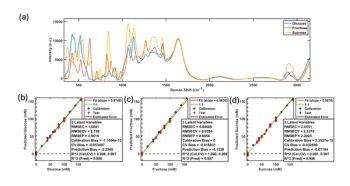
Monitoring Sugar Consumption and Ethanol Production During Yeast Fermentation Using a Raman Plate Reader and Multivariate Analysis
This column shows that a Raman plate reader paired with partial least squares regression can simultaneously quantify glucose, fructose, sucrose, and ethanol in yeast fermentation samples, using turbidity-matched calibration standards to correct for yeast-induced turbidity, and offers a rapid, label-free, high-throughput method for tracking sugar consumption and ethanol production in strain screening, media optimization, and process development.
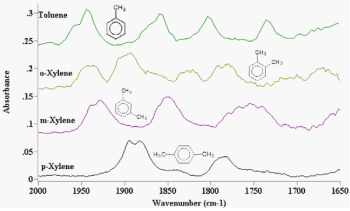
Highly Substituted Benzene Rings—The Rest of the Story II: Spectra
This column, the second installment on highly substituted benzene rings, shows that tri- and tetra-substituted substitution patterns can be distinguished by whether the ring bending peak is present and by the position of the in-phase aryl C-H wagging peak, which shifts according to how many adjacent hydrogens the ring carries.
Healthcare administrator reviewing an insurance policy schedule with a stethoscope on a clipboard, health insurance coverage, medical underwriting, prior authorization, and patient claims processing. | Image Credit: Joi_studio - stock.adobe.com
In a SciX interview, Marc Porter covered a lot of ground, from a student-driven pivot into immunoassays to a baseball analogy for Stokes and anti-Stokes scattering, and shares the open questions he is still chasing.
Ingots of pure copper or pink gold on a black background. | Image Credit: Phawat - stock.adobe.com
At SciX, Kevin Wilkinson of the Universite de Montreal explains how faster data acquisition and new software have cut analysis time and how a particle’s chemical composition can link arsenic-bearing emissions back to a copper refinery’s processes.
Spectral Frontiers: Seeing the Unseeable Microspectroscopy
Microspectroscopy, the marriage of spectroscopic chemical identification with microscopic spatial resolution, has advanced from Perkin-Elmer's first commercial infrared microspectrometer in 1953 to today's nanoscale AFM-IR probes, synchrotron-brightness infrared beamlines, and compact hyperspectral tissue imaging devices being developed for AI-assisted cancer detection.