|Articles|April 1, 2008

Spectroscopy

  • Spectroscopy-04-01-2008
  • Volume 0
  • Issue 0

Market Profile: MALDI Tandem Mass Spectrometry

First developed in the mid-1980s, matrix assisted laser desorption ionization (MALDI) added a complementary mass spectrometry ionization technique to others that were already on the market, such as electrospray ionization (ESI).

First developed in the mid-1980s, matrix assisted laser desorption ionization (MALDI) added a complementary mass spectrometry ionization technique to others that were already on the market, such as electrospray ionization (ESI). The technique was first mated to time-of-flight (TOF) mass spectrometers, and subsequently created an entirely new mass spectrometry market. However, it was not until 2000 that MALDI began to appear on tandem mass spectrometry systems, first in dedicated TOF-TOF and Q-TOF configurations, and then as more of an aftermarket product for Q-TOF, triple quadrupole, ion trap, and FT-MS instruments.

Tandem MALDI mass spectrometry demand

The advantage of MALDI ionization, primarily in comparison to ESI, which is used in LC–MS, is speed, and the fact that it is a softer ionization method. This makes MALDI better suited for larger molecules such as biomolecules and polymers. The high- throughput capability has proven to be most advantageous for the demands of pharmaceutical and biotechnology laboratories. However, these laboratories also generally demanded the additional structural and confirmatory information that can be provided by tandem mass spectrometry (MS-MS and MSn), which has led to the development of MALDI for all configurations of MS-MS.

The total market for tandem mass spectrometers that utilize MALDI was around $135 million in 2007, and is expected to see fairly robust growth. Most of this demand comes from dedicated MALDI-TOF-TOF and MALDI-Q-TOF, whose high mass range provides a strong match with MALDI. Most of the balance of demand comes from zSI-based tandem mass spectrometers that are either converted to, or alternated with, aftermarket MALDI sources. These non-TOF mass spectrometer configurations are used more for high-throughput small molecule analysis.

The foregoing data were based on SDi's market analysis and perspectives report entitled Mass Spectrometry, February 2008. For more information, contact Stuart Press, Senior Consultant, Strategic Directions International, Inc., 6242 Westchester Parkway, Suite 100, Los Angeles, CA 90045, (310) 641-4982, fax: (310) 641-8851, www.strategic-directions.com.



Related to this article

Atoms Don't Lie–The Remaking of Atomic Spectroscopy, © Hallie -chronicles-stock.adobe.com
Atomic spectroscopy has quietly gone from counting elements in bulk to counting single nanoparticles, imaging tissue at the micrometer scale, and reading Martian rocks from several meters away. The instruments got smaller, the software got smarter, and the questions they can now answer got a lot more interesting.
Spectroscopy Top 10 DOI Articles of the Month (September 2026)
The following articles are the most accessed digital object identifier (DOI) manuscripts for Spectroscopy and LCGC International during the month of September 2026. Nine articles are individually ranked here by DOI page views; the third-highest entry (186 views) was recorded against the bare journal-level DOI rather than an individual article and is therefore not attributable to a single manuscript.
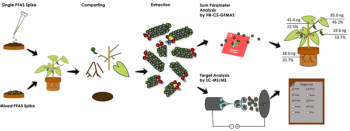
PFAS spiking experiments in bean plants (Phaseolus vulgaris)
Atomic Perspectives
This Atomic Perspectives column explains how high-resolution continuum source graphite furnace molecular absorption spectrometry (HR-CS-GFMAS) quantifies extractable organic fluorine (EOF) as a PFAS sum parameter, complementing LC-MS/MS target analysis, with applications to German river sediments, bean plants, and fluorinated polymer sealing materials.