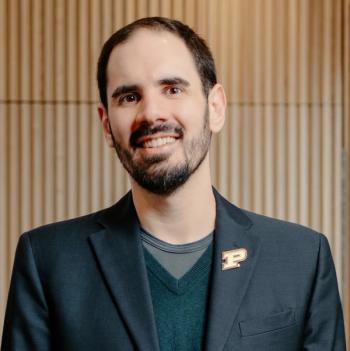
In the second part of our interview with Brandon Boor of Purdue University, he discusses how his team controls experimental variables during cleaning experiments in order to obtain interpretable data.
New Editorial Director, Laura Bush, introduces herself to the Spectroscopy community.
Sometimes, even when you enjoy your current work, embarking on a new adventure is just the thing. That is exactly the position I find myself in, as the new editorial director of Advanstar Communications' Analytical Science group, which includes Spectrocopy and LCGC North America.
Laura Bush
I have spent the last five years as the editor in chief of a sister publication, BioPharm International, focused on biopharmaceutical process development and manufacturing. It was a wonderful place to be, because the field is fascinating and full of passionate people. Yet when presented with the opportunity to shift gears and join Spectroscopy and LCGC, I could not resist.
Although only officially in the new job for 10 days now, I know already it was a good choice. Following meetings and phone calls with contributors and members of our editorial advisory board, as well as two days at the Eastern Analytical Symposium, it is clear to me that the fields of spectroscopy and chromatography, just like bioprocessing, are really interesting and full of great, passionate people. Who could ask for anything more?
Well, I could. The thing I will ask for is your input.
The questions I have been addressing with my editorial board are centered on providing you with the information you need. We are discussing the emerging trends and applications you should know about, the technological advances that may facilitate your work, and which leading researchers we want to invite to publish in our journals and speak in our educational web seminars. Keeping you abreast of the leading edge of spectroscopy is our job, and quite an enjoyable one at that. At the same time, no one knows better than you what challenges you face in the laboratory on a daily basis. Which measurements continue to present problems for you? Are you running into difficulty with a certain application or technique? Not sure what conditions are ideal for a given analysis? Let us know.
In addition, the transition to a new editor is a perfect time to evaluate not just what leading-edge and ongoing topics we want to bring you, but also how well we are providing that information, through the print and digital editions of the journal, our educational web seminars, and our newsletters. Are there ways you feel we can do this better? Do you have new ideas we should consider? On the other hand, are there aspects of the magazine, our seminars, or any of our other digital offerings that you don't want us to change at all? I encourage all of you to communicate with us about your interests, concerns, and ideas. Our purpose is to serve you, so we welcome any thoughts you have on how we can do that better.
Laura Bush is the editorial director of LCGC North America and Spectroscopy,
almost 16 years ago
Spectroscopy Market: Weathering the Storm and on the Path to Recoveryalmost 16 years ago
2010 Editorial Indexalmost 16 years ago
Neutron Spectroscopyalmost 16 years ago
Fat Finger, Falsification, or Fraud?almost 16 years ago
High-Resolution NIR Analysisalmost 16 years ago
Market Profile: Handheld and Portable NIRalmost 16 years ago
Corporate Profiles