In this Eastern Analytical Symposium (EAS) interview, Garth Simpson of Purdue University explains how a simple geometric effect at interfaces produced a 4.5-degree rotation in fluorescence emission from a naproxen monolayer.
Spectroscopy's editors gather 143 evergreen articles from 2026, including tutorials, terminology guides, technique reviews, application surveys, peer-reviewed research and the magazine's long-running columns, and organize them by subject so readers can build lasting knowledge one topic at a time.
A Q&A interview from SciX explored a porous-particle Raman platform became an alternative to SERS, and why AI could unlock biochemical meaning in vibrational spectra.
X-ray analytical techniques, spanning X-ray fluorescence (XRF), X-ray diffraction (XRD), and X-ray photoelectron spectroscopy (XPS), are becoming faster, more portable, and more energy-efficient, with microbeam XRF spot sizes once exclusive to synchrotrons now available on laboratory benchtops.
Jürgen Popp, winner of this year’s Ellis R. Lippincott Award, discusses the regulatory, cost, and workflow hurdles of moving Raman spectroscopy into hospitals.
A recent conversation with Kevin Wilkinson, a professor of environmental chemistry at the Université de Montréal, sheds light on why no single signature can separate engineered nanoparticles from natural ones.
Top articles include the publication of a new terminology guide focused on data processing, machine learning, artificial intelligence (AI), and chemometrics.
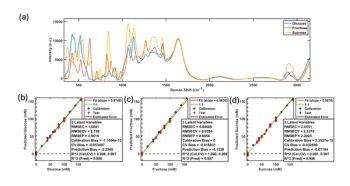
This column shows that a Raman plate reader paired with partial least squares regression can simultaneously quantify glucose, fructose, sucrose, and ethanol in yeast fermentation samples, using turbidity-matched calibration standards to correct for yeast-induced turbidity, and offers a rapid, label-free, high-throughput method for tracking sugar consumption and ethanol production in strain screening, media optimization, and process development.