SPEC PerkinElmer 11.10
|Articles|April 1, 2015

Rigaku to Acquire Agilent’s X-Ray Diffraction Business

Rigaku Corporation and Agilent Technologies have entered into an agreement for Rigaku to acquire Agilent’s X-ray diffraction (XRD) business.


The Agilent XRD group manufactures single-crystal X-ray instruments for the global chemical crystallography market. The group, formerly known as Oxford Diffraction, became part of Agilent in 2010 through Agilent’s acquisition of Varian.


Rigaku plans to combine XRD with its existing crystallography business to form a new business unit. XRD products will continue to be developed and produced at existing factories in Poland and Japan.


“The acquisition of Agilent’s X-ray crystallography business represents a significant step in the expansion of our single-crystal X-ray business,” said Hikaru Shimura, Rigaku’s president and CEO. “By combining Agilent’s XRD business with Rigaku’s expertise in protein crystallography, we will be able to leverage the best technologies from both groups to provide our current and future customers with world-class solutions for single-crystal analysis.”


The transaction is expected to be final May 1, 2015, subject to local laws and customary closing conditions. 


Related to this article

Curated 2026 Evergreen Content from Spectroscopy. ©  Chanakarn -chronicles-stock.adobe.com
Spectroscopy's editors gather 143 evergreen articles from 2026, including tutorials, terminology guides, technique reviews, application surveys, peer-reviewed research and the magazine's long-running columns, and organize them by subject so readers can build lasting knowledge one topic at a time.
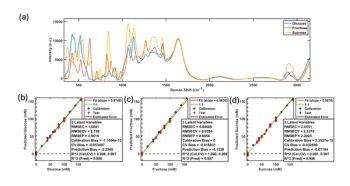
Monitoring Sugar Consumption and Ethanol Production During Yeast Fermentation Using a Raman Plate Reader and Multivariate Analysis
This column shows that a Raman plate reader paired with partial least squares regression can simultaneously quantify glucose, fructose, sucrose, and ethanol in yeast fermentation samples, using turbidity-matched calibration standards to correct for yeast-induced turbidity, and offers a rapid, label-free, high-throughput method for tracking sugar consumption and ethanol production in strain screening, media optimization, and process development.
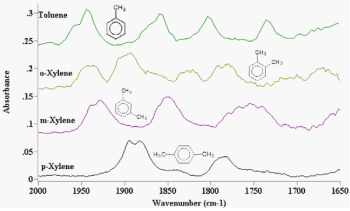
Highly Substituted Benzene Rings—The Rest of the Story II: Spectra
This column, the second installment on highly substituted benzene rings, shows that tri- and tetra-substituted substitution patterns can be distinguished by whether the ring bending peak is present and by the position of the in-phase aryl C-H wagging peak, which shifts according to how many adjacent hydrogens the ring carries.