At SciX, Jay Kitt describes the experiment he ran on his own that launched his cytochrome c research, and explains why putting a number on peptide–lipid interactions matters.
The following articles are the most accessed digital object identifier (DOI) manuscripts for Spectroscopy and LCGC International during the month of September 2026. Nine articles are individually ranked here by DOI page views; the third-highest entry (186 views) was recorded against the bare journal-level DOI rather than an individual article and is therefore not attributable to a single manuscript.
Jürgen Popp explains how head and neck surgeons in Jena use a Raman probe to locate tumor borders, why the technique could replace frozen section biopsies, and why optical tools must adapt to clinical workflows rather than the other way around.
Near-infrared (NIR) spectroscopy, built on the weak overtone and combination-band absorptions first exploited commercially in the 1970s, is now being reshaped by chip-scale MEMS sensors, rapid field calibration methods, and increasingly capable chemometric and machine-learning models.
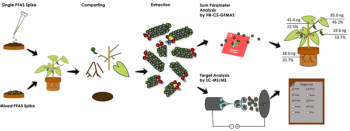
This Atomic Perspectives column explains how high-resolution continuum source graphite furnace molecular absorption spectrometry (HR-CS-GFMAS) quantifies extractable organic fluorine (EOF) as a PFAS sum parameter, complementing LC-MS/MS target analysis, with applications to German river sediments, bean plants, and fluorinated polymer sealing materials.
At SciX, Marc Porter explains how a Thanksgiving batting lesson led him to compare a bat meeting a ball to light scattering off a molecule, and how his group is using simulations to test whether the analogy holds.
Alessandro De Giacomo argues that grounding students in scientific fundamentals, rather than rushing them toward applications, is what makes breakthrough ideas possible.