SPEC PerkinElmer 11.10
News|Videos|November 6, 2026

Best of the Week: Chemometrics Terminology Guide, Pushing Past the Micron Scale

Top articles include the publication of a new terminology guide focused on data processing, machine learning, artificial intelligence (AI), and chemometrics.

Chemometrics, data processing, machine learning, and artificial intelligence (AI) are growing areas in analytical spectroscopy. A recently published terminology guide helps spectroscopists, process engineers, and analytical chemists make sense of its practical relevance. We’ll talk about it here. Also, a new “Spectral Frontiers” article examines how microspectroscopy has evolved since 1953, and we also published two new interview segments from the 2026 SciX Conference.

This is the Best of the Week.

First up, our new “Chemometrics, Data Processing, Machine Learning, and AI” Terminology Guide. Following our earlier glossaries, including the 2026 Raman edition, this guide pairs classic terms in calibration, preprocessing, regression, and validation with newer concepts like neural networks, transformers, generative AI, and explainable AI.1 It also covers supporting statistics and process analytical technology vocabulary. Built for spectroscopists, analytical chemists, and process engineers, it favors practical relevance over exhaustiveness, with references tracing back to primary sources.1

Next, our latest “Spectral Frontiers” article traces microspectroscopy from PerkinElmer’s 1953 IR microspectrometer to today’s nanoscale chemical imaging. It explains how atomic force microscopy–IR (AFM-IR) broke the IR diffraction limit, improving resolution from about 10 micrometers to roughly 10 nm, while optical photothermal IR (O-PTIR) spectroscopy offers noncontact operation and quantum cascade lasers speed up spectral mapping.2 The article also highlights synchrotron studies of batteries and single cells, plus new hyperspectral tools for AI-assisted cancer detection and moving samples.2

From SciX 2026, Marc Porter of the University of Utah explained how his group’s surface science work led to surface-enhanced Raman spectroscopy (SERS)-based immunoassays. He described overcoming serum interference in a tuberculosis test using proteinase K pretreatment, an approach now being explored for commercialization in England.3 Porter also pointed to reproducibility and pre-analytics as key clinical hurdles.3

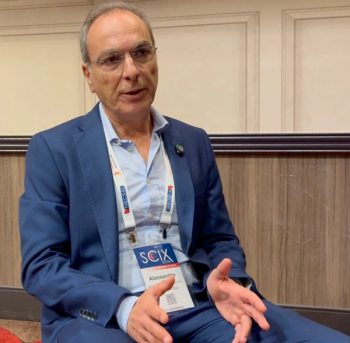
Finally, Alessandro De Giacomo of the University of Bari Aldo Moro discussed laser-induced breakdown spectroscopy (LIBS). He explained how nanoparticles enhance LIBS signals and serve as tags for disease markers, described a self-calibrated, drone-mounted LIBS system delivering in-flight measurements accurate to 0.1% and encouraged students to prioritize fundamental science.4

And that’ll do it for Best of the Week. Thanks for watching, thanks for reading, and we’ll see you next week.

References
  1. Workman, J., Jr. The Chemometrics, Data Processing, Machine Learning, and Artificial Intelligence Terminology Guide. Spectroscopy Online, 2026. https://www.spectroscopyonline.com/view/the-chemometrics-data-processing-machine-learning-and-artificial-intelligence-terminology-guide (accessed November 4, 2026).
  2. Workman, J., Jr. Seeing the Unseeable: Microspectroscopy's Push Past the Micron Scale. Spectroscopy Online, 2026. https://www.spectroscopyonline.com/view/seeing-the-unseeable-microspectroscopys-push-past-the-micron-scale (accessed November 4, 2026).
  3. Porter, M.; Workman, J., Jr.; Wetzel, W. Marc Porter on SERS Immunoassays, Sample Preparation, and How Low Detection Can Go. Spectroscopy Online, 2026. https://www.spectroscopyonline.com/view/marc-porter-on-sers-immunoassays-sample-preparation-and-how-low-detection-can-go (accessed November 4, 2026).
  4. De Giacomo, A.; Wetzel, W. The Growing Utility of LIBS in Science. Spectroscopy Online, 2026. https://www.spectroscopyonline.com/view/the-growing-utility-of-libs-in-science (accessed November 4, 2026).

Related to this article

Atoms Don't Lie–The Remaking of Atomic Spectroscopy, © Hallie -chronicles-stock.adobe.com
Atomic spectroscopy has quietly gone from counting elements in bulk to counting single nanoparticles, imaging tissue at the micrometer scale, and reading Martian rocks from several meters away. The instruments got smaller, the software got smarter, and the questions they can now answer got a lot more interesting.
Healthcare administrator reviewing an insurance policy schedule with a stethoscope on a clipboard, health insurance coverage, medical underwriting, prior authorization, and patient claims processing. | Image Credit: Joi_studio - stock.adobe.com
In a SciX interview, Marc Porter covered a lot of ground, from a student-driven pivot into immunoassays to a baseball analogy for Stokes and anti-Stokes scattering, and shares the open questions he is still chasing.
Spectral Frontiers: Seeing the Unseeable Microspectroscopy
Microspectroscopy, the marriage of spectroscopic chemical identification with microscopic spatial resolution, has advanced from Perkin-Elmer's first commercial infrared microspectrometer in 1953 to today's nanoscale AFM-IR probes, synchrotron-brightness infrared beamlines, and compact hyperspectral tissue imaging devices being developed for AI-assisted cancer detection.