Top articles include an examination of the current trends propelling atomic spectroscopy forward and post-conference coverage of the 2026 SciX show in Sparks, Nevada.
Atomic spectroscopy has quietly gone from counting elements in bulk to counting single nanoparticles, imaging tissue at the micrometer scale, and reading Martian rocks from several meters away. The instruments got smaller, the software got smarter, and the questions they can now answer got a lot more interesting.
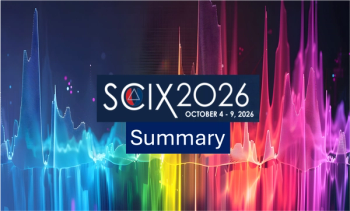
SciX 2026, the annual conference presented by the Federation of Analytical Chemistry and Spectroscopy Societies (FACSS), ran October 4–9, 2026, at the Nugget Casino Resort in Sparks, Nevada. The program spanned atomic and molecular spectroscopy, mass spectrometry, chemometrics, and bioanalysis. This report follows the meeting day by day, from Monday's clinical Raman plenaries to Friday's closing talks, drawing on the online program and Spectroscopy coverage of award winners, highlighting efforts to move Raman, SERS, LIBS, and single-particle ICP-MS toward clinical, environmental, and field use.
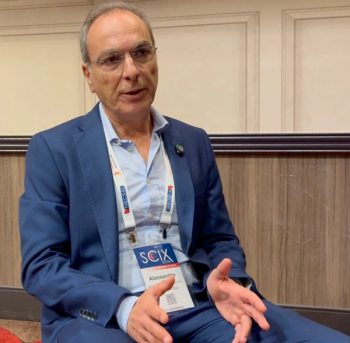
At SciX, Alessandro De Giacomo explains how a 35-member international jury chose three papers: one on correct ICCD use and two applications using LIBS and LA-ICP-MS. He also explains what the selections say about the field.
The 2026 first edition of Spectroscopy's Chemometrics, Data Processing, Machine Learning, and Artificial Intelligence Terminology Guide defines the classical chemometric, statistical, machine learning, AI, and process analytical technology (PAT) terms most likely to be encountered by working spectroscopists, analytical chemists, and process engineers.
In an interview at SciX, Alessandro De Giacomo discusses nanoparticles as signal enhancers and medical tags, a self-calibrating drone LIBS system, open questions in laser–matter interaction, and why students need a strong foundation in fundamentals.
The New York / New Jersey Section of the Society for Applied Spectroscopy will present its 2026 Gold Medal Award to Richard Crocombe at the Eastern Analytical Symposium on November 17, recognizing two decades of work that helped carry spectroscopy out of the laboratory and into the field.