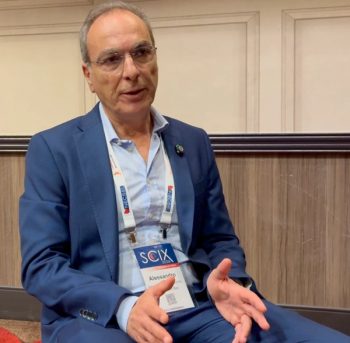
At SciX, Alessandro De Giacomo explains how a 35-member international jury chose three papers: one on correct ICCD use and two applications using LIBS and LA-ICP-MS. He also explains what the selections say about the field.
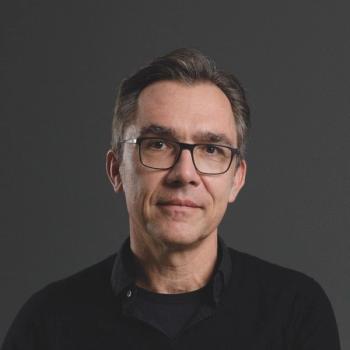
In the second part of our interview, Alex Scheeline discuss the current trends in SIBS and LIBS, and some of his observations from reading the recent literature on the subject.
The Winter Conference on Plasma Spectrochemistry in Tucson, Arizona, wrapped up last week, and it featured several important talks, including several Heritage Lectures. Alexander Scheeline, a distinguished analytical chemist and Professor Emeritus in the Department of Chemistry, School of Chemical Sciences at the University of Illinois at Urbana-Champaign, gave one of these Heritage Lectures, titled “Sparks, Pinches, and People: A Retrospective on Transient Discharges Before LIBeration” (1).
Because of Scheeline’s extensive career in spectroscopy and knowledge of spark-induced breakdown spectroscopy (SIBS) and laser-induced breakdown spectroscopy (LIBS), we sat down with him to discuss the current state of SIBS and LIBS. Part I of our conversation focused on what he talked about during his Heritage Lecture (2). In the second part of our interview, we discuss the current trends in SIBS and LIBS, and some of his observations from reading the recent literature on the subject.
Spectroscopy: What trends are you seeing in the literature around SIBS and LIBS? Can you discuss the differences between the two techniques?
Alex Scheeline: What I have seen is largely based on a handful of journals that have sent me papers to review. I think the editors know that I'm going to say about SIBS, but you should have read the papers from the 1960s and 1970s. SIBS is trying to do what LIBS did, and what LIBS did was to come up with highly spatially resolved measurements of elemental composition. In turn, LIBS was doing what SIBS used to be doing, except typically with higher spatial resolution. There were only a handful of papers on micro sparks. The one that I'm most familiar with was written by Ray Vogel. It was in a French journal in the 1960s; it's cited in this big review article that was in Applied Spectroscopy in April 2025. In essence, LIBS is mainly used for high resolution or particulate matter sampling, and SIBS is typically used for bulk analysis.
This video clip is the second part of our conversation with Scheeline. To stay up to date on our coverage of the Winter Conference, click