Application Notebook
Raman measurement on microscopic inclusions in fluorescent materials requires the ability to measure in small volumes, excellent throughput, and long wavelength excitation such as 1064 nm for fluorescence reduction.
Application Notebook
Raman measurement on microscopic inclusions in fluorescent materials requires the ability to measure in small volumes, excellent throughput, and long wavelength excitation such as 1064 nm for fluorescence reduction.
Application Notebook
Owing to technological improvements spurred on by the telecommunications boom of the last decade, Raman spectroscopy has become much more accessible to users in all application areas, including agricultural, forensic, pharmaceutical, biomedical, and others.
Application Notebook
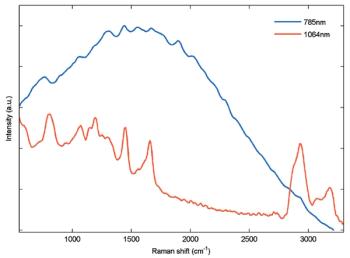
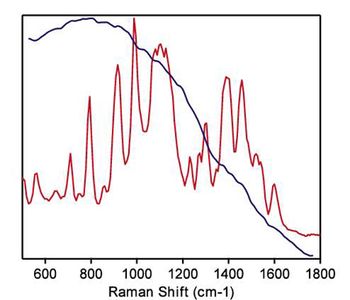
Biological tissues and other materials often autofluoresce at near-infrared wavelengths, prohibiting Raman acquisition. New, dispersive Raman systems at 1064 nm allow fluorescence-free measurement in similar integration times.
Application Notebook
BaySpec, Inc. has developed a complete line of 1064 nm excitation, dispersive Raman systems that offer maximum reduction in fluorescence interference from biological samples and thus making them very useful tools for biofuel research.
September 1st 2012
February 11th 2011