

A recent study presents a novel fluorescent probe that can detect sulfite residues effectively.
A recent study presents a novel fluorescent probe that can detect sulfite residues effectively.
A recent study examined the interaction mechanism between methylene blue (NMB) and human serum albumin (HSA) and bovine serum albumin (BSA).

Researchers in Norway used Fourier transform infrared spectroscopy protein composition from poultry.

Researchers used a multi-faceted approach that combined UV-visible, fluorescence, and circular dichronism spectroscopy to study the interaction between a newly synthesized 2-phenylquinoline-polyamine conjugate (QPC) and bovine serum albumin (BSA).
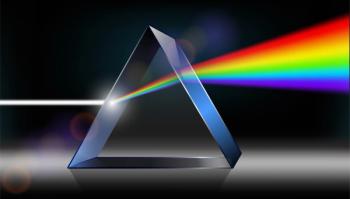
Accurately calibrating instruments is of the utmost importance for harmonization of Raman data.
Liquid crystals are used in a variety of fields including optics, electro-optics, biomedical and fast switching devices.
A recent study explains how laser-induced breakdown spectroscopy (LIBS) is better suited for rapidly quantifying heavy metals in plastics than traditional methods such as inductively couple plasma–mass spectrometry (ICP-MS) and atomic absorption spectroscopy (AAS).
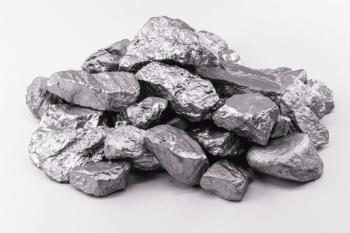
A recent study shows how the LIBS approach can be used to measure the magnetic field near the surface of plasma-facing components (PFCs).

A new study presents a novel WDXRF approach in determining carbon, oxygen, hydrogen, and nitrogen content in coal.
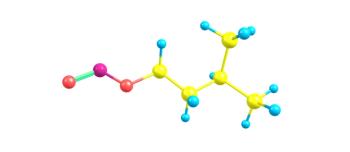
Researchers introduce a new method for accurately determining nitrite concentration beyond the linear range, utilizing UV-visible absorption spectra and correlated component regression (CCR).
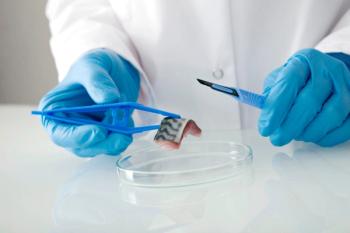
Scientists compared a portable infrared attenuated total reflection spectrometer (ATR) to a conventional ATR Fourier transform infrared (ATR FT-IR) system.
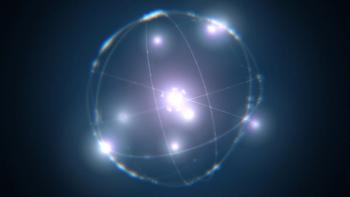
In a recent review article published in Spectrochimica Acta Part B: Atomic Spectroscopy, authors evaluate the progress atomic spectroscopy has made in heavy metal isotope analysis

A recent study used inductively coupled plasma–mass spectrometry (ICP-MS) to study the copper isotopic composition of ores of specimens excavated at three Copper and Early Bronze Age mining centers.
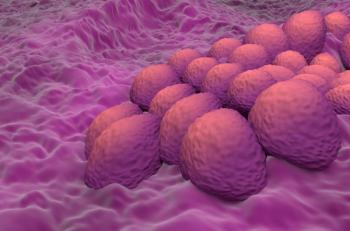
A study employing Raman spectroscopy has uncovered distinct metabolic alterations in cancer-associated fibroblasts (CAFs) isolated from overweight and obese endometrial cancer patients, providing valuable insights into the mechanistic link between obesity and endometrial cancer progression.
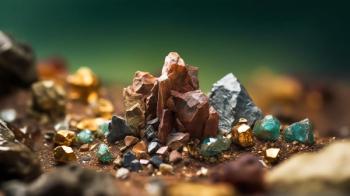
A new study showcases a newly developed automated mineral classification workflow based on laser-induced breakdown spectroscopy (LIBS) mapping, enabling fast and accurate identification of minerals in geological samples.

New research demonstrates the potential of combining LIBS and EPMA for distinguishing and characterizing uranium mineralizations, opening new avenues for environmental protection and ore genesis studies.

Researchers have developed a transfer learning-assisted laser-induced breakdown spectroscopy (LIBS) method to identify geographical origins of crops with an impressive accuracy by incorporating deep adaptation networks.
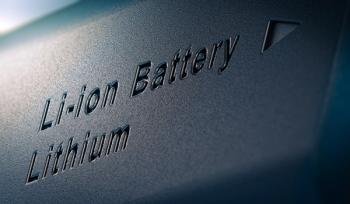
Researchers at Université Paris-Saclay have successfully employed the novel laser-induced breakdown self-reversal isotopic spectrometry (LIBRIS) technique to achieve high-resolution isotopic analysis of lithium in solid-state electrolytes for lithium batteries. The breakthrough method offers valuable insights into lithium transport mechanisms at a microscale level, holding promise for the development of safer and more efficient Li-ion batteries in the future.

The Denver X-ray Conference (DXC) will take place August 7–11th, 2023, at the Westin Chicago Lombard, in Lombard, Illinois.

Spectroscopy magazine is pleased to welcome you to the “Planetary Bodies and Other Celestial Objects” landing page, one of three landing pages in our “Spectroscopy and Space Exploration” content series.

Spectroscopy magazine is pleased to welcome you to the “Mars” landing page, one of three landing pages in our “Spectroscopy and Space Exploration” content series.

Spectroscopy magazine is pleased to welcome you to the “Outer Space: The Final Frontier” landing page, one of three landing pages in our “Spectroscopy and Space Exploration” content series.

Researchers have developed a highly sensitive method for determining total chromium in seawater using ultrasound nebulization-dielectric barrier discharge (UNDBD) vapor generation coupled with inductively coupled plasma-mass spectrometry (ICP-MS).
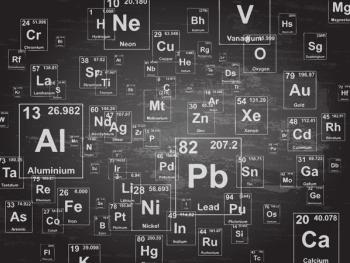
A research group has utilized laser-induced breakdown spectroscopy (LIBS) to analyze the contamination profiles of Frascati Tokamak Upgrade (FTU) limiter tiles after exposure to fusion plasma. The study revealed the presence of various contaminants, including boron, calcium, lithium, and eroded materials, providing valuable insights into the distribution and effects of fusion plasma on the surfaces of these tiles.

Researchers have developed a small and cost-efficient picoliter droplet printing device capable of accurately depositing 65 different elements for micro preparation.

A team of researchers have investigated the early dynamics of laser-induced plasma and cavitation bubbles in water, enhancing our understanding of underwater laser-induced breakdown spectroscopy (LIBS) and the critical role of bubble-plasma interaction in characterizing laser-induced plasma in water.

Researchers have developed an advanced method using laser-induced breakdown spectroscopy (LIBS) for sensitive and accurate detection of nitrogen in simulated Martian soil.

By evaluating different pretreatment techniques, such as sieving and milling, the study highlights the significance of achieving sample homogeneity for precise analysis of soil texture and organic carbon content.
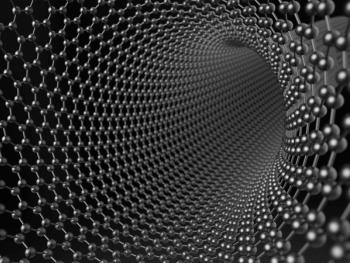
A team of researchers has developed a greener and simplified method for determining elemental contaminants and metal catalyst residues in carbon nanotubes (CNTs) using ICP-OES.

Researchers have developed a non-destructive method for identifying monoclonal antibody drug substances using Raman spectroscopy.