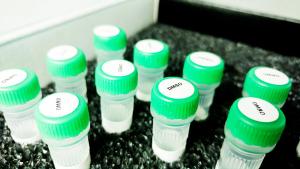
A new review article in Microchimica Acta finds that smartphone-based optical and spectroscopic sensors show strong potential to decentralize food safety testing across contaminants like pesticides, heavy metals, and pathogens.
A new review article in Microchimica Acta finds that smartphone-based optical and spectroscopic sensors show strong potential to decentralize food safety testing across contaminants like pesticides, heavy metals, and pathogens.

An upcoming talk at the SciX Conference will explore the concept of electroosmosis, and how machine learning (ML) can be used to understand electroosmotic flow behavior.

A new deep-learning framework that was recently developed improves the accuracy of near-infrared spectroscopy for non-destructively measuring internal quality traits.
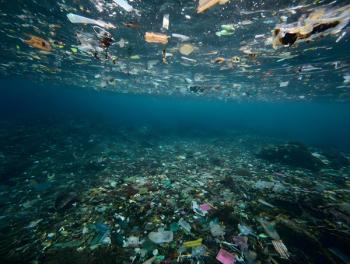
An upcoming talk at SciX 2026 Conference will describe a new multimodal platform using laser ablation inductively coupled plasma–mass spectrometry (LA-ICP-MS) elemental mapping that can detect nanoparticles and microplastics in biological tissue.
Top content published this week include a feature article on a new innovation called the Personalized Optical Digital Twin (PODT), a recap of the International Conference on Raman Spectroscopy (ICORS) 2026 show, and a Q&A on measuring nanoparticle formation in indoor air.

An upcoming interview with Ji-Xin Cheng, a Theodore Moustakas Distinguished Professor in Photonics and Optoelectronics at Boston University, will highlight his ongoing work in coherent Raman scattering microscopy.

An upcoming presentation will explore how we can better understand and control nanoparticle morphology is critical for tuning material performance.

The 2026 SciX Conference will offer an assortment of short courses during the conference week in Sparks, Nevada. We highlight these courses below.
Top content published this week include a feature article on our 2026 Emerging Leader in Molecular Spectroscopy award winner and more.

An upcoming interview with Brandon E. Boor, the Dr. Margery E. Hoffman Associate Professor in Purdue University's Lyles School of Civil and Construction Engineering, will recap his talk at the American Chemical Society (ACS) Fall 2026 Meeting.

An upcoming talk at SciX 2026 will explore how spectroscopy is being used to evaluate urban air pollution.

An upcoming talk at the 2026 SciX Conference will focus on nanoplastic analysis to distinguish between plastic and non-plastic particles.

The Peter Griffiths Award, named for the legendary infrared spectroscopist, recognizes the best paper published annually in Applied Spectroscopy Practica. Its inaugural recipients, Sara Fraser-Miller and coauthors, will be honored at SciX 2026, and the journal is now accepting 2026 submissions for the third award.

In this preview of the 2026 SciX Conference, we offer an overview of the keynote presentation.

In this preview of the upcoming 2026 SciX Conference, we highlight a new social event that attendees should consider going to.
Top content published this week include a historical examination of the James L. Waters Symposium, an obituary of Peter Griffiths, and an article examining Raman spectroscopy instrumentation.

A new peer-reviewed article discusses how pairing quantum mechanics with nanomaterial-based Raman spectroscopy has significantly boosted the technique's sensitivity.

The SciX 2026 Conference returns to Sparks, Nevada, this year. Here's what attendees can expect.
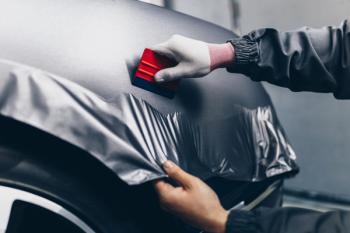
Researchers have developed a new validated attenuated total reflectance Fourier transform infrared (ATR-FTIR) and Raman spectroscopy framework for forensically distinguishing automotive vinyl wraps by manufacturer, color, and finish.
Top content published this week include a new article on bioprocess monitoring, a new “Chemometrics in Spectroscopy” column, and an overview of the latest advancements in laser-induced breakdown spectroscopy (LIBS).

A recent study presented a new system for testing metal contamination on microplastics.
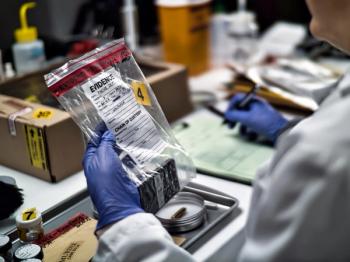
A recent review article examines how AI-assisted spectroscopic tools are propelling forensic trace evidence analysis forward.
A recent study presented a new method for identifying textile fibers using Raman spectroscopy and deep learning.
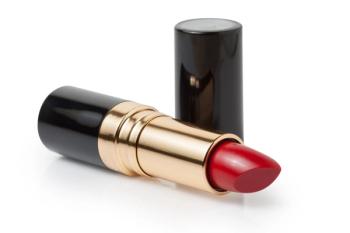
A recent study published in the journal Forensic Science International tested a new method for differentiating between individual lipstick products.

This curated selection of articles highlights recent advancements in microplastics and nanoplastics and soil analysis.
Top content published this week include a new digital e-book that explores the role of spectroscopy in cultural heritage analysis and more.

A handheld infrared (IR) scanner paired with an artificial neural network (ANN) can identify human versus animal bone with over 96% accuracy.

The 29th International Conference on Raman Spectroscopy (ICORS 2026) is set to have a gala dinner cruise for conference attendees to enjoy.

X-ray fluorescence (XRF) spectroscopy has been an important method in the study Stonehenge.

Sapienza Università di Roma team reports near-infrared (NIR) techniques that identify and quantify cocaine and cutting agents through sealed police evidence bags, addressing safety and chain-of-custody concerns in forensic laboratories.