

The American Chemical Society (ACS) will be having its annual conference from August 23–27, in Chicago, Illinois. Here’s why spectroscopists and analytical chemists should attend.
The American Chemical Society (ACS) will be having its annual conference from August 23–27, in Chicago, Illinois. Here’s why spectroscopists and analytical chemists should attend.

A recent study examined how surface-enhanced Raman spectroscopy (SERS) is being used with machine learning (ML) analysis to accurately distinguish patients with Crohn’s disease.

Monitoring wood coating decay proactively ensures the safety of commercial wood used for construction.

Researchers detect up to 587 particles per kilogram in locally marketed table salt, raising questions about daily consumer exposure through a dietary staple.

A recent review article explores the problem of weak interfacial forces in soft matter research.
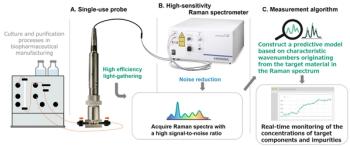
A new inline Raman measurement system seeks to address current industry challenges in biopharmaceutical manufacturing.

Concentrations comparable to polluted European rivers detected in sediments of the Urdaibai Biosphere Reserve.

A team of researchers developed a set of green spectrophotometric techniques capable of simultaneously quantifying two widely prescribed antihypertensive drugs.

Researchers demonstrated that combining terahertz spectroscopy with a convolutional neural network can non-destructively determine the age of mountain-cultivated ginseng with up to 96.3% accuracy, outperforming traditional HPLC-based methods while preserving the integrity of high-value ginseng roots.
Top articles published this week include a celebration of World Oceans Day, a look at how spectroscopy is advancing lithium-ion battery analysis, and more.

Today we celebrate World Oceans Day, where we highlight how spectroscopy is helping us advance ocean analysis and preserve this fragile ecosystem.

A recent study explores a solvent-free FT-IR spectroscopy method for simultaneously measuring two common hypertension drugs in tablet form.

Engineered spherical tip design pushes sensitivity below 10 ppb, researchers report.

Researchers at Nanjing Forestry University have developed a color-changing fluorescent probe made from waste spruce wood that can detect formaldehyde in drinking water at concentrations below World Health Organization (WHO) safety limits.
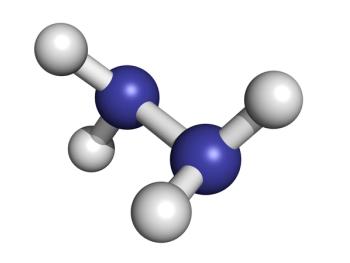
Dual-mode chemosensor developed at Shanxi Agricultural University achieves sub-micromolar detection limits in under five minutes.

A team at Hebei University has developed a fluorescent probe that visualizes heavy metal stress in plant cells by detecting changes in intracellular viscosity, offering researchers a new real-time tool for assessing crop stress resistance.

A Portuguese study suggests a low-cost optical technique could help stratify risk for delayed graft function before transplantation, though researchers caution the findings require larger-scale validation.
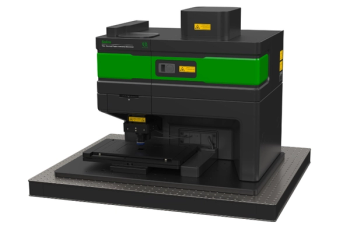
PicoQuant announced the launch of a new microscope designed for materials characterization.

A recent study presented a reagent-free FT-IR-based spectroscopic method that detects melamine adulteration in milk powder at concentrations as low as 0.46 parts per million.
Researchers have identified chemical signatures in the South Atlantic Ocean that could allow scientists to track the movement of major deep-water masses using dissolved organic matter.

In this overview of the upcoming International Symposium for Molecular Spectroscopy (ISMS), we discuss the awards given out at the conference.
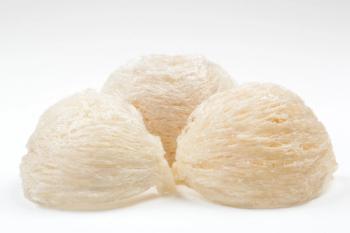
Researchers at the National University of Singapore have demonstrated that widely used spectroscopic methods for detecting adulteration in edible bird's nest products are based on a false assumption — that genuine product has a uniform chemical signature.

A peer-reviewed study published in Remote Sensing confirms that a commercial Earth-observation satellite can map live coral cover with accuracy comparable to specialized aircraft — a potential turning point for global reef monitoring.
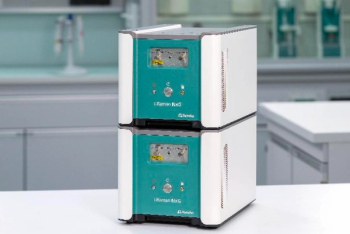
Metrohm USA has introduced two new laboratory Raman spectrometers—the i-Raman NxG and i-Raman Duo—targeting researchers and quality control teams who require more detailed chemical characterization than standard identification systems provide.
Top articles include a new “Pathways in Spectroscopy” episode, an interview with Christina Ryder about assessing collagen in archaeological bone, and a look at how hyperspectral satellite imaging can be used in detecting and analyzing methane emissions.

A recent study used a multi-technique analytical approach to characterize the 2021 Tiglit meteorite, revealing unexpected mineral phases that point to a more complex history of shock events and post-fall alteration.
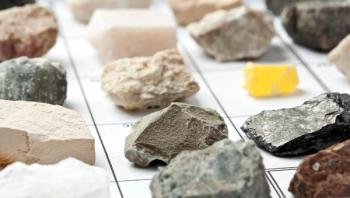
Researchers have found that LIBS spectroscopy models trained on compressed rock pellets produce inaccurate compositional readings when applied to fine-grained loose powders, raising concerns for planetary missions analyzing Martian soils.

Abstract submissions are open through April 15 as conference expands scope to include molecular methods.
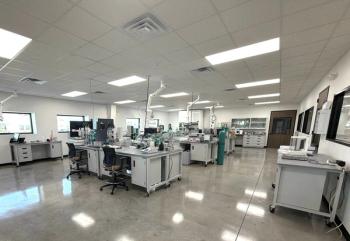
Metrohm's new i-Raman Platform is designed for both researchers and industry professionals alike. This Q&A overview provides the necessary information users would want to know.

Pittcon 2027 will take place in Pittsburgh, Pennsylvania, returning to where the conference was first held back in 1950. What does this mean for the Steel City?