
Spectroscopy-02-01-2012
Spectroscopy
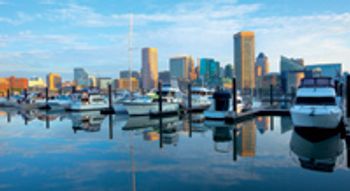
A preview of the conference to be held in Baltimore, Maryland, April 23–27, 2012
Spectroscopy
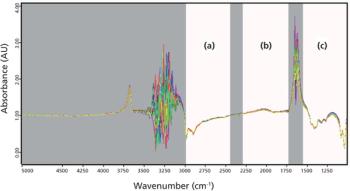
A review of the application of IR spectroscopy for the analysis of color components in winemaking, and the contribution of spectral preprocessing to improve the multivariate calibration.
Spectroscopy
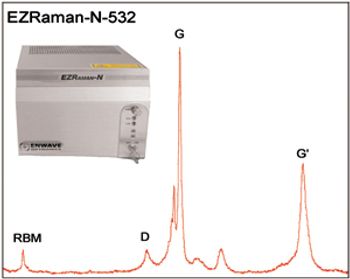
Raman has a unique capability to characterize nanoscale materials that are between crystalline and amorphous.
Spectroscopy
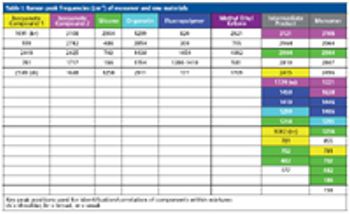
Confocal Raman microscopy can identify particles in the 5–50 ?m range and can bridge the gap between micro-FT-IR and SEM-EDS analyses.
Spectroscopy
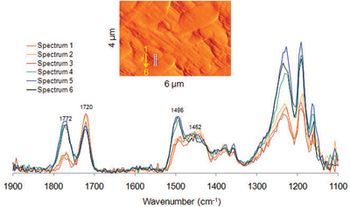
By combining atomic force microscopy (AFM) and infrared (IR) spectroscopy, one can attain spatial resolution improvements of two orders of magnitude over traditional IR spectroscopy.
Spectroscopy
The series on classical least squares continues with a comparison of experimental results and theoretical expectations.
Spectroscopy
A lively exchange of perspectives emerged recently on the LinkedIn group for Spectroscopy, as well as on the group for our sister magazine, LCGC. The conversation, sparked by a New York Times article, was about what it takes to become a scientist and why so many students, particularly in the United States, become discouraged along the way.
Spectroscopy
Click the title above to open the Spectroscopy February 2012 regular issue, Vol 27 No 2, in an interactive PDF format.
Spectroscopy
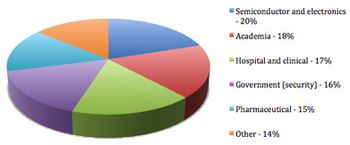
One of the newest and fastest-growing subsegments of the molecular spectroscopy market is terahertz spectroscopy. It makes use of a previously underused segment of the electromagnetic spectrum and is already seeing demand from a variety of industries. Although it remains unclear which industries will become major adopters of the technology, it looks certain that terahertz spectroscopy will develop into a major segment of the molecular spectroscopy market.
Advertisement
Advertisement
Trending on Spectroscopy Online
1
Best of the Week: The 2026 Emerging Leader in Molecular Spectroscopy, Advancements in FT-IR Spectroscopy
2
The Fractionation and Characterization of Nanoplastics in Environmental and Food Science
3
The 2026 Emerging Leader in Molecular Spectroscopy Award
4
Exploring Indoor Nanoparticle Formation
5