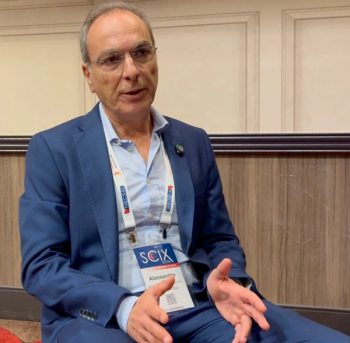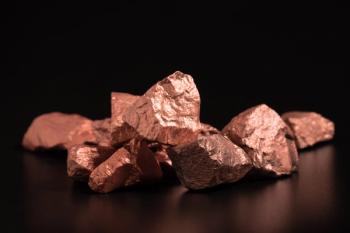
At SciX, Kevin Wilkinson of the Universite de Montreal explains how faster data acquisition and new software have cut analysis time and how a particle’s chemical composition can link arsenic-bearing emissions back to a copper refinery’s processes.
One of the newest and fastest-growing subsegments of the molecular spectroscopy market is terahertz spectroscopy. It makes use of a previously underused segment of the electromagnetic spectrum and is already seeing demand from a variety of industries. Although it remains unclear which industries will become major adopters of the technology, it looks certain that terahertz spectroscopy will develop into a major segment of the molecular spectroscopy market.
One of the newest and fastest-growing subsegments of the molecular spectroscopy market is terahertz spectroscopy. It makes use of a previously underused segment of the electromagnetic spectrum and is already seeing demand from a variety of industries. Although it remains unclear which industries will become major adopters of the technology, it looks certain that terahertz spectroscopy will develop into a major segment of the molecular spectroscopy market.
Terahertz spectroscopy demand by industry for 2011
The terahertz region of the electromagnetic spectrum lies between the far-infrared region and the microwave region, and it includes wavelengths of about 0.1–1.0 mm. Terahertz spectroscopy is complementary to other spectroscopy techniques, as a number of compounds have unique fingerprints in the terahertz region, including some narcotics, explosives, and various polymorphic forms of active pharmaceutical ingredients. A variety of common materials, as well as human tissue, are semitransparent to terahertz radiation, and it is non-ionizing, making it safe for human exposure. A wide variety of commercial terahertz spectrometers is already on the market, including, conventional frequency-domain systems, time-domain systems, imaging systems, and portable instruments.
Although there is not yet widespread adoption of terahertz spectroscopy in any one industry, there is considerable potential and interest from several sectors. Some vendors have developed terahertz-based systems for oncology applications and are pursuing regulatory approvals. Most vendors are targeting industries as diverse as pharmaceuticals, semiconductors and electronics, and aerospace materials.
The first commercial terahertz spectrometers were introduced less than a decade ago, and since then, the market has grown to more than $10 million in annual sales. There are now more than half a dozen vendors of terahertz spectrometers, and, as with most new markets, most of the competitors are fairly recent start-ups. None of the major spectroscopy vendors are yet producing their own terahertz spectrometers.
The foregoing data were based on SDi’s market analysis and perspectives report entitled Global Assessment Report, 11th Edition: The Laboratory Life Science and Analytical Instrument Industry, October 2010. For more information, contact Stuart Press, Vice President – Strategic Analysis, Strategic Directions International, Inc., 6242 Westchester Parkway, Suite 100, Los Angeles, CA 90045, (310) 641-4982, fax: (310) 641-8851, www.strategic-directions.com.
almost 15 years ago
Short Coursesalmost 15 years ago
Productsalmost 15 years ago
SPIE Defense, Security, and Sensing 2012almost 15 years ago
Confocal Raman Microscopy in Forensic Pharmaceutical Investigationsalmost 15 years ago
Nanoscale IR Spectroscopy: AFM-IR — A New Techniquealmost 15 years ago
From the Editoralmost 15 years ago
Vol 27 No 2 Spectroscopy February 2012 Regular Issue PDF