

The Federation of Analytical Chemistry and Spectroscopy Societies (FACSS) announced that James Hendler will deliver the keynote address at the SciX Conference this year.
The Federation of Analytical Chemistry and Spectroscopy Societies (FACSS) announced that James Hendler will deliver the keynote address at the SciX Conference this year.

A recent study from Japan explored how to improve rice processing and other agricultural products using Raman scattering spectroscopy.
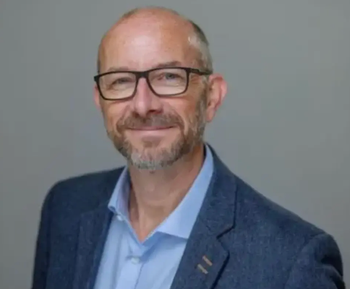
In the final part of our interview with Nick Stone, he discusses standardizing Raman technology across multiple clinical centers, and what it means to him to be attending the SciX Conference as the recipient of the Charles Mann award.

A recent study examined how to classify commercial wood species in Brazil using Fourier transform-infrared (FT-IR) spectroscopy.
In part 2 of our conversation with Nick Stone, we discuss topics such as machine learning (ML) and spectrometer transferability in clinical settings.
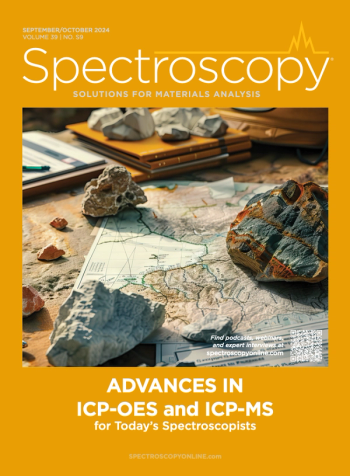
Click here to download the issue PDF for the Spectroscopy digital supplement "Advances in ICP-OES and ICP-MS for Today's Spectroscopists."
Click here to download the issue PDF for the Spectroscopy digital supplement "Advances in ICP-OES and ICP-MS for Today's Spectroscopists."

The advent of artificial intelligence (AI) and machine learning (ML) has propelled spectroscopic instrumentation to new heights.

At GCC 2024 in Galveston, Texas, there will be several oral sessions that focus on spectroscopy’s role in the petroleum industry. We preview them here.

Top articles published this week include several interviews to preview the upcoming SciX Conference, a recent study using an epidermal spectroscopic scanning (ESS) device to detect skin cancer, and a news story about machine learning for meteorite classification.

Some of the most recent articles in data analytics, statistics, machine learning, and artificial intelligence are presented below.
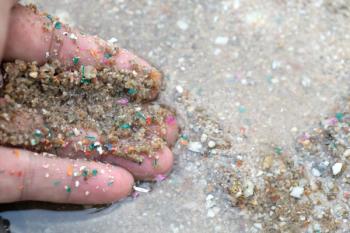
A recent study from Heliyon examined microplastic contamination in soda beverage packaging.
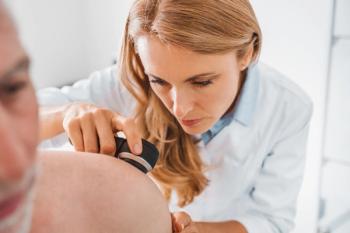
DermaSensor published the results of their elastic scattering spectroscopic device in differentiating between benign and malignant lesions.

A recent study in beverage analysis showcased the capability of a new electronic tongue (e-tongue) prototype in analyzing liquid samples such as coconut water.

A recent study from Jiangsu University highlighted the challenges associated with the real-time application of microfluidic technology. We summarize their research here.

Top articles published on Spectroscopy involving inductively coupled plasma–optical emission spectroscopy (ICP-OES), according to our readers.

A recent review article published in the Journal of Analytical Atomic Spectrometry describes the latest advancements in environmental monitoring while expanding the capabilities of inductively coupled plasma–mass spectrometry (ICP-MS) and laser-induced breakdown spectroscopy (LIBS).

Tanta University recently published a review article that highlighted the versatility of metal complexes in analytical chemistry. We recap their research here.
Top articles published this week include a preview of our upcoming “The Future of Forensic Analysis” e-book, a few select offerings from “The Future of Forensic Analysis,” and a news story about next-generation mineral identification.

In honor of “The Future of Forensic Analysis,” which launched on September 16th, we highlight five of our most popular articles, according to readers.

A recent study examined how near-infrared (NIR) spectroscopy can estimated the water content in recycled construction materials.
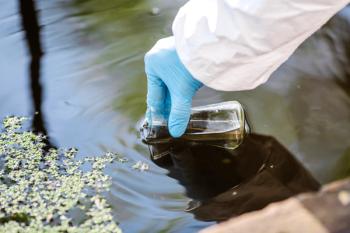
A recent review article evaluates how artificial intelligence (AI) and machine learning (ML) are being used to assess water quality.

A recent study recently examined how proton nuclear magnetic resonance (NMR) spectroscopy can characterize debranched waxy rice starches in ice cream.

Part 2 of The Future of Forensic Analysis will be released in an e-book. We preview what this e-book will feature.
This landing page highlights the various Q&A interviews conducted for “The Future of Forensic Analysis.”
This landing page highlights some of the latest studies conducted in forensic analysis that used spectroscopic instrumentation and techniques as part of the methodology.
![Artifacts arranged in a display case at an archaeological museum, showcasing the fruits of excavation. [Artifacts arranged in a museum display case] | Image Credit: © Julia - stock.adobe.com](https://cdn.sanity.io/images/0vv8moc6/spectroscopy/9e8e8a3ab701eafd12b2e31257ee3e8812691cf6-7280x4080.jpg?w=350&fit=crop&auto=format)
A new compilation in the Journal of Raman Spectroscopy highlights advanced Raman spectroscopy techniques, showcasing their transformative applications in forensic and cultural heritage fields. These approaches include mobile setups, enhanced optics, and sophisticated data treatment methods.

Researchers have developed a cutting-edge, portable LIBS sensor designed for crime scene investigations, offering both handheld and tabletop modes. This device enables on-the-spot analysis of forensic samples with unprecedented sensitivity and depth, potentially transforming forensic science.

This article offers some insight into using attenuated total reflectance Fourier transform infrared (ATR FT-IR) spectroscopy at crime scenes.