
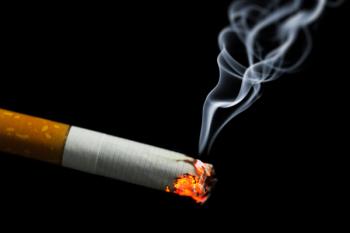
Scanning electron microscopy/energy-dispersive x-ray (SEM/EDX) spectrometry analysis of cigarette burns on the corpse of a child led to adding child abuse to the charges against the alleged perpetrator.
Scanning electron microscopy/energy-dispersive x-ray (SEM/EDX) spectrometry analysis of cigarette burns on the corpse of a child led to adding child abuse to the charges against the alleged perpetrator.
The introduction of miniaturized near-infrared (NIR) instruments has transformed the use of technology in the field of forensics. A recent research paper examines the main aspects and provides a comprehensive, critical review of this equipment.
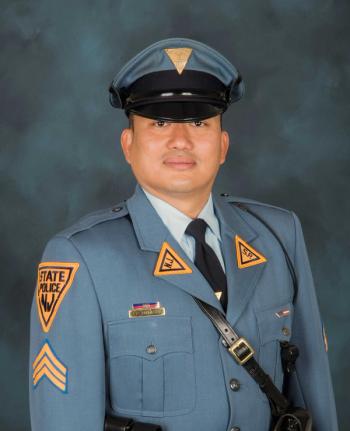
Pakorn Patimetha, Detective Sergeant with the New Jersey State Police's Hazardous Materials Response Unit spoke to Spectroscopy about how officers use portable spectroscopy technology to detect potentially harmful materials at crime scenes.
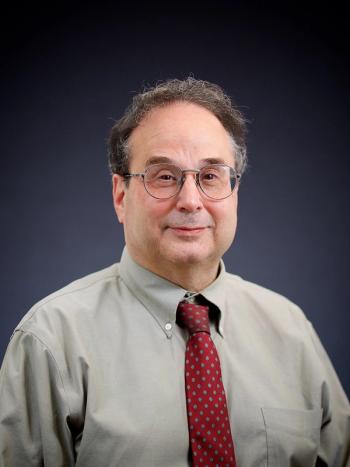
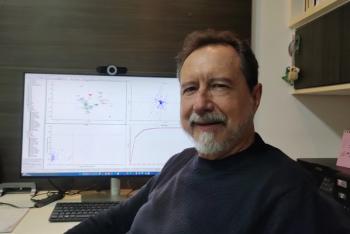
For "The Future of Forensic Analysis” series, we interviewed Barry Lavine, regents professor from The Department of Chemistry at Oklahoma State University in Stillwater, Oklahoma, to describe his most recent work in applying Raman and infrared (IR) spectroscopy in forensic paint analysis.

The Institute of Forensic Science and Criminology of Bundelkhand University (Jhansi, India) has used Fourier transform infrared spectroscopy (FT-IR) combined with principal component analysis (PCA) and partial least square regression (PLSR) to investigate adulteration in petroleum products and to design an adulterant profiling method.
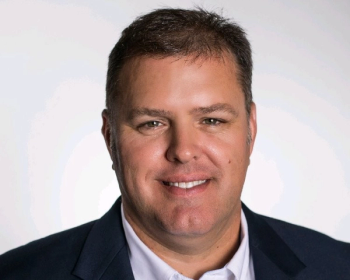
Spectroscopy sat down with Brandon Gayle, who specializes in training first responders to use FT-IR, Raman, and other analytical techniques in emergency situations.

Matthieu Baudelet, an associate professor of Chemistry at the National Center for Forensic Science at the University of Central Florida, is currently exploring how laser-based spectroscopic techniques can be used in forensic anthropology. Spectroscopy recently sat down with Matthieu Baudelet, Kristen Livingston, and Katie Zejdlik to discuss their research as part of “The Future of Forensic Analysis” content series.
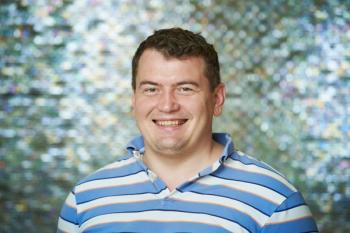
Researchers at Texas A&M University (College Station, Texas) presented a novel approach to forensic hair analysis that is based on high-throughput, nondestructive, and non-invasive surface-enhanced Raman spectroscopy (SERS) and machine learning (ML). Using this approach, Dmitry Kurouski and his team investigated the reliability of the detection and identification of artificial dyes on hair buried in three distinct soil types for up to eight weeks.
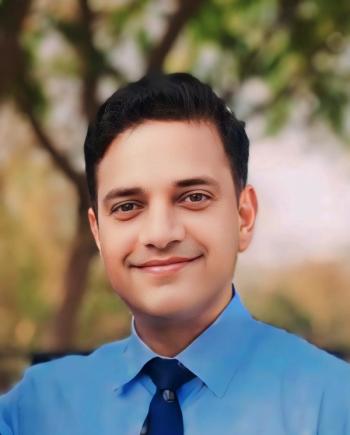
As part of “The Future of Forensic Analysis” content series presented by Spectroscopy, we sat down with Dr. Rajinder Singh of Department of Forensic Science, Punjabi University, Patiala, to talk about his recent work using attenuated total reflectance Fourier transform infrared spectroscopy (ATR-FT-IR) to distinguish different animal species based on hair samples.
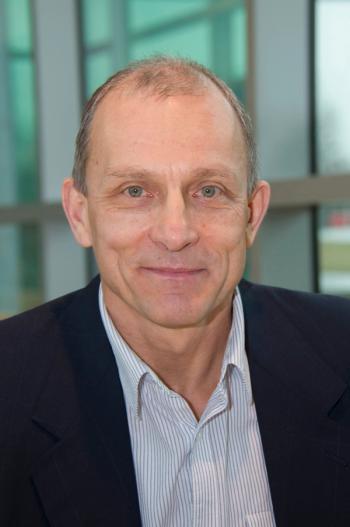
As part of "The Future of Forensic Analysis," executive editor Jerome Workman, Jr. sat down with Igor Lednev to discuss several of his recent papers related to his spectroscopic research in forensic analysis.
A recent study explores the effectiveness of near-infrared (NIR) and ultraviolet-visible (UV-vis) spectroscopy in determining the time since deposition (TSD) of bloodstains, a critical aspect of forensic investigations. By comparing these two methods, researchers aim to improve the accuracy and reliability of bloodstain dating, with potential implications for real-world forensic applications.
A multi-organizational team, believing that a reason for slow adoption is a lack of evidence that data taken on one spectrometer can transfer across to data taken on another spectrometer to provide consistent diagnoses, investigated multi-center transferability using human oesophageal tissue. By using a common protocol, the researchers aimed to minimize the difference in machine learning performance between centers.
Top articles published this week include a preview of our upcoming “The Future of Forensic Analysis” content series, a peer-reviewed article about the pharmaceutical industry, and a news story about a recent study that examined the neural synchrony in close relationships.

A recent review article examines the historical progression of analytical techniques in geochemical sciences, including X-ray fluorescence (XRF).

In this preview leading up to the SMASH NMR Conference in Burlington, Vermont, we preview the oral sessions set to take place on Tuesday September 17th.
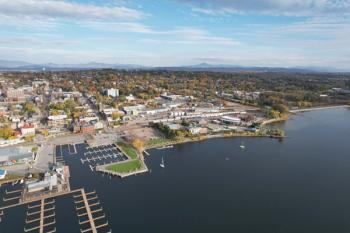
In this preview leading up to the SMASH NMR Conference in Burlington, Vermont, we preview the oral sessions set to take place on Monday September 16th.

At the upcoming SMASH NMR Conference in Burlington, Vermont, the Magnetic Resonance in Chemistry Early Career Research Symposium will take place on Sunday September 15th. Here is what attendees can expect.

A recent study published in Neuroscience & Biobehavioral Reviews examined functional near-infrared spectroscopy (fNIRS) hyperscanning studies to learn more about how the interpersonal neural synchronization (INS) affects close relationships.

Along with the one-day online event, Spectroscopy will also release an e-book containing additional, never-before-seen coverage.
Top articles published this week include a review article on the latest research in agriculture analysis, a peer-reviewed article on near-infrared (NIR) spectroscopy, and an interview about using fluorescence spectroscopy in cheese ripening.

A recent study from Australia used mid-infrared (MIR) spectroscopy to analyze the spectra of soil core samples taken from vegetated coastal ecosystems (VCEs).
The following is a short overview of what SMASH conference attendees can expect at the Mestrelab User Meeting, which will take place on Sunday September 15th at 1:00 pm EST.
On Sunday, September 15th, the SMASH NMR 2024 conference will kick off in Burlington, Vermont. Here is what attendees can expect at Bruker’s User Meeting.
This study aimed to establish a fast, accurate method for quality evaluation of herbal medicine using NIR and chemometrics with ultraviolet-visible spectrophotometry (UV-vis) as a standard method to determine the total flavonoids content.

In part two of our exploration of wood forensics, a deep dive of a recent study from Panjab University explains why attenuated total reflectance Fourier transform infrared (ATR-FT-IR) spectroscopy improves on traditional methods in this space.

Wood forensics is an important field that helps authenticate wood and addresses the challenges that illegal logging brings. In this multipart article, we explore the wood forensics industry, and how spectroscopic techniques are contributing to its advancement.

A joint French-Canadian study examined the ripening process of commercially popular Comté and cheddar cheeses, which are widely consumed in those countries, utilizing mid-infrared (mid-IR) and synchronous fluorescence spectroscopy (SFS) in their analysis.

This review article explores recent advancements in Fourier transform infrared (FT-IR) spectroscopy, highlighting its advancing capabilities and applications across diverse scientific disciplines.

A recent article authored by scientists from the Institute of Sport and Preventive Medicine, part of the University of Saarland (Saarbrücken, Germany), discusses their investigation of the absolute and relative test-retest reliability of the Moxy Monitor, as well as their investigations into side differences of oxygen saturation at the vastus lateralis muscle of both legs in male cyclists.
Top articles published this week include an article on the upcoming SMASH 2024 Conference, a report on handheld near-infrared (NIR) spectrophotometers, and an inside look at the paprika and poultry industries.