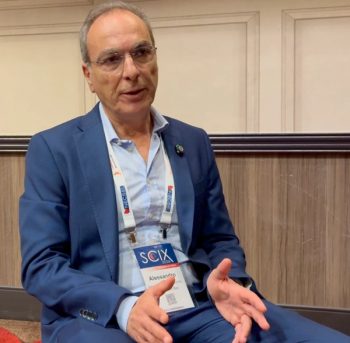
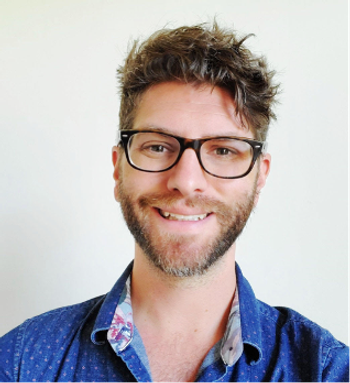
Honored with a dedicated Spectrochimica Acta Part B award session at SciX 2026, De Giacomo explains why larger nanoparticles produce stronger LIBS signals and what that means for sensing design.
Wednesday's program at SciX 2026 kept returning to one question: can spectroscopy perform outside the controlled laboratory? Speakers took surface-enhanced Raman scattering (SERS), laser-induced breakdown spectroscopy (LIBS), mid-infrared photonics, chemometrics, and fluorescence excitation–emission matrix (EEM) spectroscopy into clinics, food plants, reactor coolant loops, brine fields, and drinking water supplies.
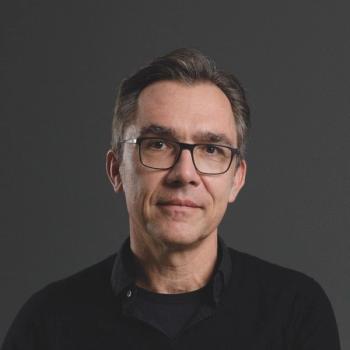
The 2026 AES Mid-Career Award recipient explains how molecular-scale simulations of polyelectrolyte brush-grafted nanochannels are revealing unexpected flow behavior.
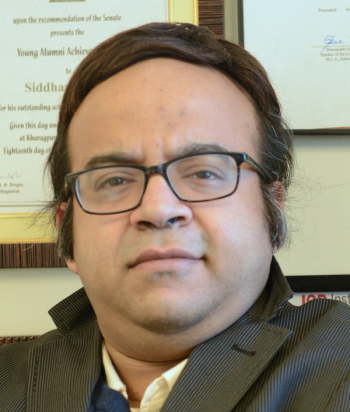
The 2026 Ellis R. Lippincott Award recipient discusses the barriers to clinical adoption of photonic diagnostics and his vision for personalized optical digital twins.
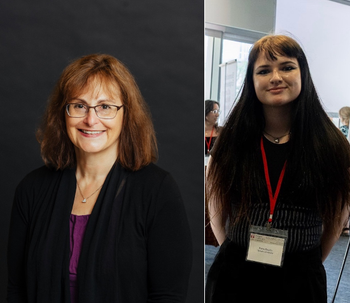
As part of our coverage of the SciX 2026 Conference, Nancy Pleshko and Petra Baylin of Temple University sat down with Spectroscopy to talk about their recent study, explaining how Fourier transform infrared (FT-IR) imaging of ultra-high weight molecular polyethylene (UHMWPE) implants permits oxidation evaluation throughout the sample yielding insight into failure.
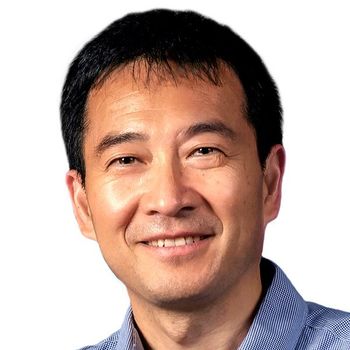
At the upcoming 2026 SciX Conference, Ji-Xin Cheng at Boston University will be recognized with the Charles Mann Award for Applied Raman Spectroscopy. Leading up to the conference, Cheng sat down with Spectroscopy to talk about the advancements being made in confocal Raman microscopy.
Spectroscopy invites the scientific community to nominate an outstanding early-career atomic spectroscopist for the 2027 award. Nominations are due December 10, 2026.