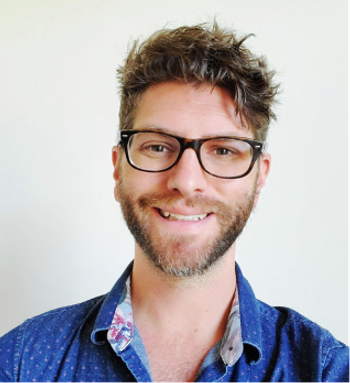
In this “Tutorial Tuesday” clip, Peter Larkin, who is a Manager of Spectroscopy, Thermal Analysis, and Chromatography at Syensqo, highlights how people use the method or technique that they are comfortable with, even if it’s not the best one to use.
The following articles are the most accessed digital object identifier (DOI) manuscripts for Spectroscopy and LCGC International during the month of September 2026. Nine articles are individually ranked here by DOI page views; the third-highest entry (186 views) was recorded against the bare journal-level DOI rather than an individual article and is therefore not attributable to a single manuscript.
SciX 2026, the annual conference presented by the Federation of Analytical Chemistry and Spectroscopy Societies (FACSS), ran October 4–9, 2026, at the Nugget Casino Resort in Sparks, Nevada. The program spanned atomic and molecular spectroscopy, mass spectrometry, chemometrics, and bioanalysis. This report follows the meeting day by day, from Monday's clinical Raman plenaries to Friday's closing talks, drawing on the online program and Spectroscopy coverage of award winners, highlighting efforts to move Raman, SERS, LIBS, and single-particle ICP-MS toward clinical, environmental, and field use.
Four finalists for the FACSS Innovation Award presented on the afternoon of October 8, 2026, at SciX 2026. Their work spanned drone-mounted laser-induced breakdown spectroscopy (LIBS), a touch-and-sound virtual reality system for blind scientists, polarized infrared (IR) imaging of shape memory polymers, and an ultrasound-activated plasmonic nanoplatform aimed at Parkinson’s disease.
At SciX 2026, Thursday morning’s “New Challenges in Chemometrics” session questioned long-held assumptions, from reliance on autonomous model selection to the restriction of spectral data to real numbers.
Top content published this week include an examination of how near-infrared (NIR) spectroscopy is being changed by machine learning and the final part in a panel discussion on spectroscopy education.
Atomic spectroscopy has quietly gone from counting elements in bulk to counting single nanoparticles, imaging tissue at the micrometer scale, and reading Martian rocks from several meters away. The instruments got smaller, the software got smarter, and the questions they can now answer got a lot more interesting.
At SciX, Jay Kitt discusses a project applying Raman spectroscopy to PFAS analysis, the mentoring role he found after leaving traditional academia, and why machine learning could unlock the biochemical information in vibrational spectra.