SPEC PerkinElmer 10.13
News|Videos|October 9, 2026

Best of the Week: The Future of Spectroscopy Curriculum, Mapping Oxidation in Fractured Knee Implant Posts

Top content published this week include an examination of how near-infrared (NIR) spectroscopy is being changed by machine learning and the final part in a panel discussion on spectroscopy education.

SpecAcademy is live, but the number of courses young spectroscopists will have access to will continue to grow. A recent panel discussion with five SpecAcademy instructors explored what topics should be featured in future courses on the platform. Also, how has near-infrared (NIR) spectroscopy evolved, and what can Fourier transform infrared (FT-IR) spectroscopy tell us about the oxidation of posterior-stabilized total knee arthroplasty implants? We’ll explore both these topics here.

This is the Best of the Week.

First up is the final installment of our five-part SpecAcademy panel. Five instructors explained why the platform's first courses focus on fundamentals. Undergraduate programs have shifted toward other disciplines, and changes to American Chemical Society certification have weakened spectroscopy training.1 The panelists also warned that automated instruments encourage users to accept results without question. Future courses could cover Raman and infrared (IR) interpretation, instrumentation, spectral searching, NIR, attenuated total reflectance (ATR), ultraviolet–visible (UV-vis) spectroscopy, and photothermal methods. Their reminder: chemometrics can't fix bad data.1

Next, Jerome Workman, Jr., examines how machine learning (ML) is transforming near-infrared spectroscopy. NIR was once a routine tool for analyzing grain and tablets.2 Now, it fits in handheld devices, and neural networks are replacing traditional calibrations. Today, NIR helps control fermentation, detects hidden consciousness in brain-injured patients, and screens for microplastics. Workman concludes that NIR has moved from reporting numbers to making judgments, though real-world reliability is still an open question.2

At SciX 2026, Petra Baylin and Nancy Pleshko of Temple University discussed why polyethylene posts in knee replacement implants sometimes fracture. These fractures are rare, but each one requires revision surgery. Using FT-IR spectral imaging, the team mapped oxidation across retrieved implants.3 They found that it peaks near the post's midpoint, right where the femoral component makes repeated contact.3 They suggest that better implant selection could reduce the risk.3

Finally, another review article explored how photothermal and quantum cascade lasers are pushing FT-IR past the diffraction limit. Optical photothermal infrared (O-PTIR) spectroscopy reaches roughly 450-nm resolution, while quantum cascade lasers (QCLs) dramatically speed up acquisition.4 Looking ahead, Workman expects instruments that combine both strengths.

That's the Best of the Week. Thanks for reading, thanks for watching, and we’ll see you next week.

References

  1. Miseo, E.; Carrabba, M.; Larkin, P. J.; D’Agostino, J.; de Haseth, J.; Wetzel, W. Where Should Spectroscopy Curriculum Go Next? Spectroscopy Online, 2026. https://www.spectroscopyonline.com/view/where-should-spectroscopy-curriculum-go-next- (accessed October 6, 2026).
  2. Workman, Jr., J. Light That Thinks: How Near-Infrared Spectroscopy Learned to See Inside Bodies, Bioreactors, and the Biosphere. Spectroscopy Online, 2026. https://www.spectroscopyonline.com/view/light-that-thinks-how-near-infrared-spectroscopy-learned-to-see-inside-bodies-bioreactors-and-the-biosphere (accessed October 6, 2026).
  3. Pleshko, N.; Baylin, P. A.; Wetzel, W. Mapping Oxidation in Fractured Knee Implant Posts with FT-IR Imaging. Spectroscopy Online, 2026. https://www.spectroscopyonline.com/view/mapping-oxidation-in-fractured-knee-implant-posts-with-ft-ir-imaging (accessed October 7, 2026).
  4. Workman, Jr., J. Past the Diffraction Limit: How Photothermal and Quantum Cascade Lasers Are Reinventing FT-IR Spectroscopy. Spectroscopy Online, 2026. https://www.spectroscopyonline.com/view/past-the-diffraction-limit-how-photothermal-and-quantum-cascade-lasers-are-reinventing-ft-ir-spectroscopy (accessed October 6, 2026).


Related to this article

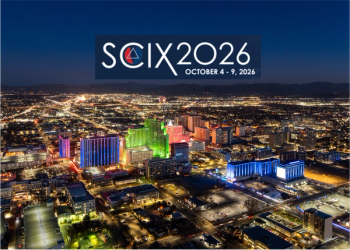
Sparks near Reno Nevada – Site of 2026 SciX Conference ©   DTM Media  -chronicles-stock.adobe.com
Wednesday's program at SciX 2026 kept returning to one question: can spectroscopy perform outside the controlled laboratory? Speakers took surface-enhanced Raman scattering (SERS), laser-induced breakdown spectroscopy (LIBS), mid-infrared photonics, chemometrics, and fluorescence excitation–emission matrix (EEM) spectroscopy into clinics, food plants, reactor coolant loops, brine fields, and drinking water supplies.
FACSS 2026 Award Interviews ©  Erin -chronicles-stock.adobe.com
Eight FACSS award winners at SciX 2026, One LIBS trailblazer. Forty-eight questions. And not one of them is a softball. Award season in spectroscopy usually means polite applause, a plaque, and a photo. We're not completely interested only in the award sessions. The eight scientists honored at SciX 2026 in Sparks, Nevada, along with LIBS researcher Alessandro De Giacomo, are pushing Raman into operating rooms, flying LIBS on drones, reading chemistry off Mars, and tracing toxic metals downwind of industrial sites. Their work makes big claims. In the coming days, Spectroscopy will sit down with eight of these researchers and ask whether those claims hold up. The interviews that follow won't just celebrate. They'll press on the gaps between simulation and experiment, between the lab bench and the clinic, and between a clever paper and an instrument someone will actually buy and use.
Infrared Reimagined: How FT-IR Spectroscopy Learned to Read Molecules, ©  Luis Eduardo  -chronicles-stock.adobe.com
FT-IR spectroscopy, long treated as a mature bench technique for confirming a carbonyl stretch or fingerprinting a polymer, has quietly become one of chemistry’s most versatile discovery engines: it now infers molecular structure straight from a spectrum without a reference library, resolves chemistry tens of nanometers wide, and screens a fingerstick of blood for disease in minutes. The last five years of published research show FT-IR moving from a confirmatory tool into a predictive, autonomous, and field-ready analytical platform.