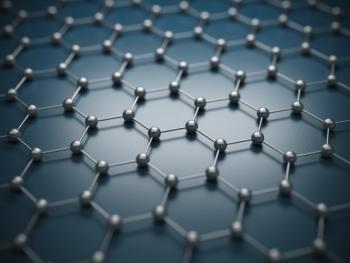
At SciX 2026, Siddhartha Das explains how graphene can be used to show how atom-level interactions between ions and water decide what passes through a membrane and what stays behind.
UV-vis absorption spectroscopy, one of analytical chemistry's oldest and most accessible techniques, remains foundational to cutting-edge science, underpinning the Nobel Prize-winning discovery and synthesis of quantum dots and continuing to evolve through ultralow stray-light optics, chip-scale sensors, and AI-integrated process analyzers.
In this interview segment from SciX, Juergen Popp explains why molecular “twins” built from optical measurements could reach patients within a decade, provided the field builds the regulatory, computing, and standards ecosystem around the technology.
Siddhartha Das explains how machine learning helps his group sift through roughly a trillion simulation data points. It reveals water and electroosmotic flow behavior and could speed the design of sensor-like channels.
In his SciX interview, Marc Porter discusses what happens to hydrogen when thiols bind to gold, how close analytical chemists can get to detecting a single molecule in a liter, and his new PFAS-focused startup.
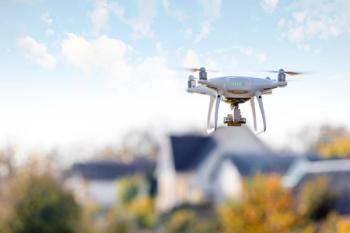
At SciX, Alessandro De Giacomo explained how airborne LIBS can produce quantitative results. Instead of relying on reference measurements, the method draws calibration directly from the measured signal, which sidesteps the drone’s positioning and motion problems.
At SciX, Jürgen Popp explains how miniaturized optical spectroscopy could add molecular data to wearable health tracking, which could enable earlier disease detection and a shift toward prevention.
At SciX, Jay Kitt describes the experiment he ran on his own that launched his cytochrome c research, and explains why putting a number on peptide–lipid interactions matters.