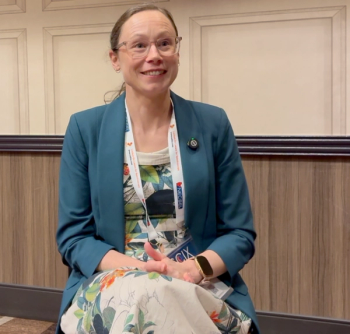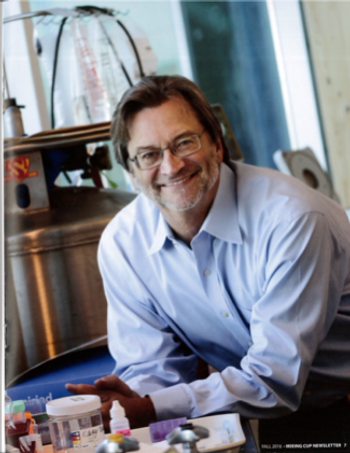
At SciX, Jay Kitt describes the experiment he ran on his own that launched his cytochrome c research, and explains why putting a number on peptide–lipid interactions matters.
In this interview segment from SciX, Juergen Popp explains why molecular “twins” built from optical measurements could reach patients within a decade, provided the field builds the regulatory, computing, and standards ecosystem around the technology.
Digital twins have long been used in industry to monitor how machines perform. According to Jürgen Popp, who is a Scientific Director of the Leibniz Institute of Photonic Technology (IPHT) in Jena, Germany, and a professor at Friedrich Schiller University Jena, the concept is now gaining traction in medicine.
Speaking at SciX, Popp noted that conference attendees are increasingly discussing optical and digital twins, and that physicians are expressing interest in virtual models of organs. Combined with growing research into miniaturized optical devices, he sees a clear opportunity to bring this approach into healthcare.
Developing the technique, however, is only the first step. Popp stressed that implementation requires engaging a wide range of stakeholders. Devices must satisfy regulators and prove reliable and trustworthy, and the software behind them must rest on trustworthy artificial intelligence (AI). The data infrastructure is another hurdle: twins will depend on cloud-based systems that few groups can build alone. This, Popp argued, must be a large-scale societal effort. He pointed to a European virtual twins initiative as one example and expressed hope that molecular information from optical measurements could be incorporated into it, adding that similar programs are needed worldwide. Standardization, he said, is equally important. The message is that researchers must look beyond the technology itself to the entire ecosystem surrounding it.
If that groundwork is laid correctly, Popp believes that, given the pace of progress in miniaturization and AI development, such systems could be implemented within about ten years. He sees particular promise for rural areas facing physician shortages and for developing countries, where the approach could give people access to high-quality assessment of their personal health. Popp emphasized that implementation need not be limited to home care. Testing could take place in a pharmacy or a coffee shop, where a person might complete a simple test while reading the newspaper or drinking coffee. The goal, he said, is to keep the threshold for access as low as possible.