Dear Reader,
Every September, we look forward to National Forensic Science Week with genuine anticipation, and this year, September 20–26, 2026, feels especially exciting. It's a week set aside to recognize the scientists, analysts, and technicians who turn trace evidence into truth, and to celebrate the techniques that make that transformation possible. Few tools do more of that quiet, essential work than spectroscopy, and this booklet is our chance to show you why.
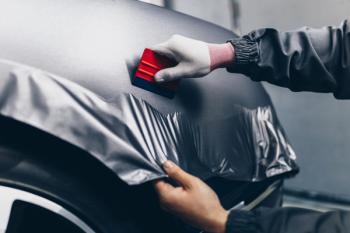
Spectroscopy has always had a natural home in forensic science. A spectrum doesn't lie: whether it's an infrared signature lifted from a fiber, a Raman peak pulled from a paint chip, or a near-infrared scan taken right through a sealed evidence bag, the data speaks with a precision that holds up in the field and in the courtroom. What excites us most about the research we've gathered here is how far that precision has traveled in just the past year. Investigators can now use ATR FT-IR and Raman spectroscopy to trace an automotive vinyl wrap back to its manufacturer, color, and finish. A handheld infrared scanner paired with a neural network can tell human bone from animal bone with better than 96% accuracy in the field, in minutes. Italian researchers have found a way to identify and quantify cocaine through an unopened police evidence bag, protecting both chain of custody and the safety of the people handling it. And laser-induced breakdown spectroscopy, combined with machine learning, is now helping investigators identify gunshot residue even from nontoxic ammunition, where the old elemental markers simply aren't there anymore.
Taken together, these stories tell a bigger one: forensic spectroscopy is getting faster, smaller, and smarter at exactly the pace the field needs it to. Portable and handheld instruments are moving powerful analysis out of the central lab and into crime scenes, accident sites, and evidence rooms, and machine learning is helping scientists find answers in data that used to defy easy interpretation.
We also had the privilege of bringing you to the American Academy of Forensic Sciences (AAFS) Conference earlier this year, where we sat down with researchers and educators, including Kelly Elkins and Jaden Force of Towson University, Tom Spudich of Southern Illinois University Edwardsville, and James Cizdziel of the University of Mississippi, to talk candidly about where this field is headed, and what it takes to build a career in it.
I'm proud of the work Will Wetzel and our editorial team have put into covering this community all year, and I'm glad to share a piece of it with you now. Thank you for the work you do, and for letting spectroscopy be part of the story.
With appreciation and excitement for what's next,
Jerome Workman, Jr.
Associate Editorial Director
Spectroscopy