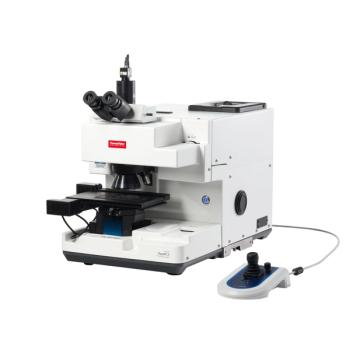
The modular system is intended to help laboratories analyzing microplastics, pharmaceutical formulations, forensic evidence, and other microscopic samples.
A handheld infrared (IR) scanner paired with an artificial neural network (ANN) can identify human versus animal bone with over 96% accuracy.
In a recent study, a team of researchers used a portable, handheld spectroscopy device combined with an artificial neural network (ANN) can identify whether a bone fragment came from a human or an animal with a median accuracy of 96.3%.1 Published in the journal Spectrochimica Acta Part A: Molecular and Biomolecular Spectroscopy, the study is another indicator of handheld spectroscopic instrumentation being used in forensic science.
One of the trends that we are currently seeing in forensics (and in analytical spectroscopy more broadly) is the miniaturization of spectrometers.2,3 Because of their ability to conduct analyses on-site, handheld spectrometers give researchers and forensic scientists a way for them to conduct their analyses without moving samples to a laboratory, which runs the risk of destroying or tampering with them.2–4
A recurring issue in forensic science is that investigators frequently encounter skeletal remains that are fragmented or degraded. Some of the most common areas where they deal with incomplete remains are at archaeological dig sites and crime scenes.1 Although there are methods (such as mass spectrometry, DNA testing, and histological analysis) that can be used to determine whether a bone is human or not, they require samples to be chemically process or cut, so they are inherently destructive.1
This is the main reason why handheld spectrometers could be useful. These instruments can help scientists preliminarily figure out what the bone sample is on-site without damaging the remains.1
Using a handheld spectroscopy device and an artificial neural network (ANN), the research team tested their approach on 225 femoral bone samples and found it could also distinguish among several species with 77.8% median accuracy.1 The results indicate that their method could potentially offer forensic investigators a rapid, non-destructive alternative to laboratory methods that currently take days and consume part of the evidence itself.1
The technique uses near-infrared (NIR) spectroscopy, which measures how a material absorbs and reflects infrared light to generate a chemical "fingerprint" of its composition.1 Researchers scanned the bone samples with a handheld NIR device, then fed the resulting spectral data into artificial neural network models trained to classify the samples first as human or non-human, and separately by species.1 The models were evaluated using internal cross-validation alongside a held-out subset of the data reserved for independent testing.
Beyond the binary human/non-human classification, the study used principal component analysis (PCA) to examine how bone spectra clustered by species. Using PCA allowed the researchers to determine the time elapsed since death, also known as the post-mortem interval.1 The finding suggests handheld NIR spectroscopy may eventually contribute to estimating how long remains have been exposed, in addition to identifying their origin, though the research team did not definitively propose their method as a dating tool.1
Much of the limitations of the study revolved around the diversity of the samples and the size of the samples. The researchers sampled 225 bones in the study, which seems large, but the bones only represented a limited range of species and preservation conditions.1 Another limitation relates to model performance, which could be related to the sample size. The accuracy of the multi-species model, which is well below the binary model's performance, indicated the technology is currently more reliable at flagging human remains than at pinpointing which animal a non-human sample came from, particularly among closely related species.1 As a result, there is a need to build larger, more diverse data sets and incorporate varied bone sources and preservation states, to refine the models further.1
Another limitation of this study is the handheld NIR instruments themselves. The researchers acknowledged that, while the results were encouraging, portable instruments trade performance for portability, and the handheld NIR tools were no exception.1 Compared with benchtop laboratory spectrometers, compact handheld units typically operate over narrower spectral ranges and at lower resolution, which can affect classification reliability.1 Because of that gap, the study relied on data collected directly from the handheld device rather than assuming that results from larger laboratory instruments would translate to field conditions, which is a distinction the authors said is essential for any dataset intended to support real-world forensic deployment.1
Future studies should examine how to improve the models. This could mean that researchers experiment with pairing NIR spectroscopy with complementary techniques such as mid-infrared (MIR) spectroscopy or advanced imaging to boost accuracy.1 The researchers also raised the possibility of app-based data collection, which would let field investigators contribute spectral readings from real cases directly into future training data sets, potentially accelerating model refinement beyond what controlled laboratory studies can achieve alone.1
References