This study was designed to address limitations in using chemical residue as evidence in forensic investigations. Lipstick is known as a form of trace evidence, which is defined as chemical residue that moves from one surface to another during contact.1,2 Indonesia is one of the main producers of lipstick, and because the industry is growing rapidly in the country, new lipstick formulations are being created, which means that existing forensic lipstick databases do not include these new formulations.1,3
How did the researchers collect the spectral data?
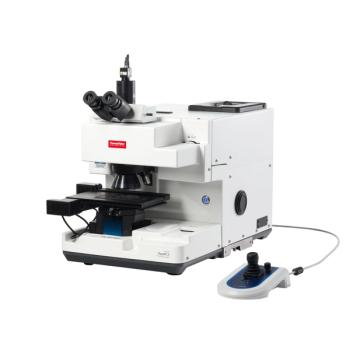
The researchers collected five spectral readings from each of the 99 lipsticks using a Fourier transform infrared (FT-IR) spectrometer with an attenuated total reflectance (ATR) crystal. The spectral data was then processed using two statistical techniques: principal component analysis (PCA) and linear discriminant analysis (LDA). PCA identifies patterns of chemical variation across the sample set.1 LDA builds a model capable of classifying an unknown sample against known references.1
What were the limitations of the study?
The researchers acknowledged that method accuracy shifted based on the organic base formulation. If the organic base formulation is the same and only differed in pigment, the method was not as effective.1 The authors believe that this limitation can be addressed in a future study by pairing the IR technique with Raman spectroscopy, which is more sensitive to pigment chemistry.1
The findings give Indonesian forensic laboratories a domestically relevant baseline for cosmetic trace evidence for the first time and add to a broader body of chemometric research aimed at extracting investigative leads from physical evidence even when no reference sample is initially available.1
References
- Ikhtiarini, A. N.; Sauzier, G.; Lewis, S. W. A Forensic Market Survey of Indonesian Lipsticks Using ATR-FTIR and Chemometrics. For. Sci. Int. 2026, 386, 112981. DOI: 10.1016/j.forsciint.2026.112981
- National Institute of Justice, Trace Evidence. National Institute of Justice, 2026. https://nij.ojp.gov/topics/forensics/trace-evidence (accessed August 20, 2026).
- GMI Research, Indonesia Cosmetic Market and Analysis Report – Opportunities and Forecast 2025-2032. GMI Research, 2026. https://www.gmiresearch.com/report/indonesia-cosmetic-market/ (accessed August 20, 2026).