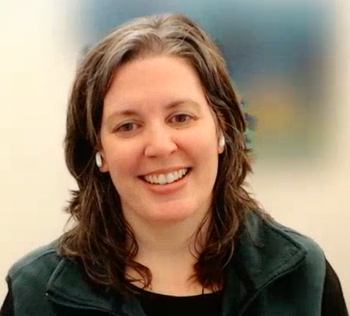
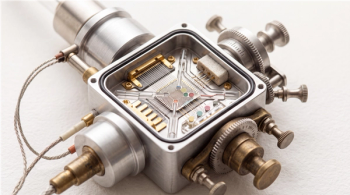
In this video interview, Erica Cahoon, PerkinElmer’s Atomic Spectroscopy Portfolio Director, provides an introduction to the new NexION® 1100 ICP-MS, specifically designed for laboratories looking for a reliable, yet easy-to-use solution for everyday trace-elemental analyses applications.
Advertisement
Key Learning Objectives:
Discover the new NexION 1100 ICP-MS and how it reinvents the user experience for everyday applications;
Familiarize yourself with the ease-of-use, performance, and sustainability benefits of the NexION 1100 ICP-MS system;
Learn about PerkinElmer’s NexION ICP-MS portfolio and how each solution is engineered to meet specific laboratory needs/requirements.
The following articles are the most accessed digital object identifier (DOI) manuscripts for Spectroscopy and LCGC International during the month of October 2026. Nine articles are individually ranked here by DOI page views; the seventh-highest entry (99 views) was recorded against the bare LCGC North America journal-level DOI rather than an individual article and is therefore not attributable to a single manuscript.
Garth Simpson of Purdue University explains how patterned photobleaching and spatial Fourier transforms can turn a single-point measurement into a diffusion coefficient at every pixel in the field of view.
In the below Eastern Analytical Symposium (EAS) interview, Kristin Wustholz of the College of William & Mary explains how machine learning applied to fluorescence blinking can identify dyes from cultural heritage objects without relying on SERS or spectral data.
In 2026, spectroscopy stopped behaving like a bench measurement and started acting like an intelligent, portable, and increasingly personal information system. Here is what Spectroscopy readers could not stop reading this year, and why 2027 may be the year these ideas leave the laboratory for good.
The updated and expanded 2026 edition of Spectroscopy's Instrument Components Terminology Guide defines the sources, detectors, optical and dispersive elements, sampling hardware, physical constants, and unit conversions used across UV-vis, NIR, IR, Raman, X-ray, and atomic spectroscopic instrumentation, with new terms reflecting component developments reported between 2022 and 2026.
In this "Pathways in Spectroscopy" clip, Kevin Wilkinson explains why adaptability, critical evaluation of instruments, and data analysis skills matter more for graduate students than mastering any single technique.
Garth Simpson of Purdue University previews an upcoming chirality session at the Eastern Analytical Symposium and explains why the meeting’s blend of academic and industry researchers produces the most impactful science.