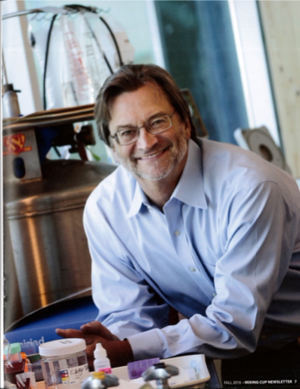
Award winners at SciX 2026 described how Raman, LIBS, and single-particle techniques are moving from proof of concept toward real-world use.

Marc Porter is a Distinguished Professor Emeritus in Chemistry and Chemical Engineering at the University of Utah, whose research examines chemical, physical, and biological phenomena at liquid-solid interfaces, with a strong emphasis on Raman spectroscopy, surface-enhanced Raman scattering (SERS)-based immunoassays, and plasmonic surface design. He has published more than 250 peer-reviewed papers and delivered over 430 invited lectures, and his honors include the 2003 R&D 100 Award for Extrinsic Raman Labels, the 2011 ANACHEM Award, and the 2025 Charles Mann Award for Applied Raman Spectroscopy. The ACS Award in Spectrochemical Analysis, given by the ACS Division of Analytical Chemistry, recognizes outstanding contributions to the field and has previously gone to researchers including Ji-Xin Cheng and Weihong Tan.
Award winners at SciX 2026 described how Raman, LIBS, and single-particle techniques are moving from proof of concept toward real-world use.

In a SciX interview, Marc Porter covered a lot of ground, from a student-driven pivot into immunoassays to a baseball analogy for Stokes and anti-Stokes scattering, and shares the open questions he is still chasing.
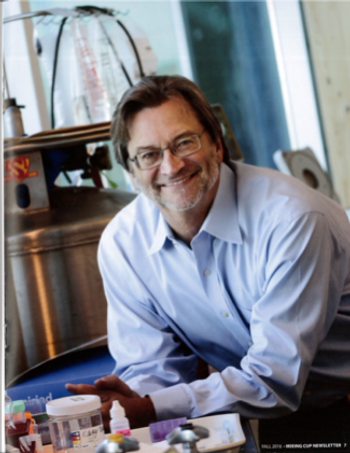
Marc Porter describes how his group’s surface science work led to SERS-based immunoassays, why reproducibility and pre-analytics decide whether a test reaches the clinic, and the questions he still wants to answer.

In his SciX interview, Marc Porter discusses what happens to hydrogen when thiols bind to gold, how close analytical chemists can get to detecting a single molecule in a liter, and his new PFAS-focused startup.

At SciX, Marc Porter explains how a Thanksgiving batting lesson led him to compare a bat meeting a ball to light scattering off a molecule, and how his group is using simulations to test whether the analogy holds.
In this segment of his SciX interview, Marc Porter explains why every step matters when measuring at picomolar and femtomolar levels, and how switching to proteinase K helped make his group’s tuberculosis work more clinic-ready.
At SciX 2026, Marc Porter explained why surface-enhanced Raman scattering can outperform fluorescence assays. He also described how a protein-denaturing step rescued his team’s tuberculosis test from a major loss in sensitivity.
The recipient of the ACS Award in Spectrochemical Analysis discusses how surface-enhanced Raman scattering became a practical diagnostic readout and how close it is to clinical use.