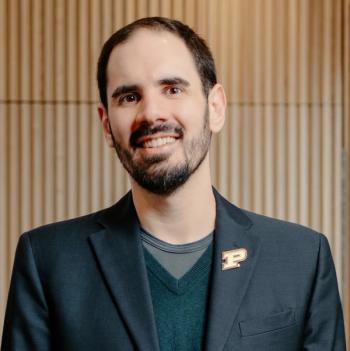
In the second part of our interview with Brandon Boor of Purdue University, he discusses how his team controls experimental variables during cleaning experiments in order to obtain interpretable data.
Laboratories performing trace metals analysis today are challenged to process more samples at lower detection levels with fewer resources. Often, the limitations of existing sample preparation approaches for metals analysis such as large consumption of acids, safety and handling problems, inconsistent recoveries, and limited throughput create a "bottleneck" in productivity. To help break these bottlenecks, Milestone offers a complete suite of microwave sample prep and clean chemistry productivity tools, backed by over 25 years of industry experience and an unmatched portfolio of over 50 patents. As a world leader in microwave technology, Milestone is known for providing safe, reliable, and flexible platforms that enhance the productivity of metals testing labs. The key to this technological leadership lies in bringing together individuals from diverse scientific and engineering disciplines to solve real world problems with innovative microwave instrumentation.
Over 20,000 customers worldwide look to Milestone to improve their metals digestions, organic extractions, mercury analysis, and synthetic chemistry processes. We partner with our customers to meet their challenges now and well into the future.
Ethos UP: The most advanced closed vessel microwave digestion system offering Wi-Fi enabled extended control.
UltraWAVE: Single reaction chamber microwave digestion in a benchtop package for unmatched capabilities.
UltraCLAVE: Single reaction chamber microwave digestion offering ultimate throughput
DMA-80: Direct mercury analysis with results in 6 min per sample
DuoPUR: On demand acid purification
TraceCLEAN: Mercury analysis by atomic absorption
PYRO: Fast microwave ashing
Milestone's global headquarters are based in Bergamo, Italy, with manufacturing and R&D facilities in Germany and Switzerland. We support our global customers through direct offices in China, Japan, and Korea, as well as distributor networks in over 70 countries. Milestone's North American headquarters are located in Shelton, Connecticut, to provide applications, technical, and customer service support to our clients. We stock a full range of consumables, accessories, and service parts. Our applications lab is equipped with a full range of productivity tools and a team of application chemists to provide customer demonstrations as well as method development. With a full service, support, and field sales team, Milestone can quickly respond to customer needs.
Milestone Inc.
almost 10 years ago
Raman Thermometryalmost 10 years ago
FT-IR Microscopy with High Spatial Resolutionalmost 10 years ago
Analysis of Metals in Aerosols on Air Filtersalmost 10 years ago
Failure Analysis of Packaging Materialsalmost 10 years ago
Pesticide Detection Using SERS Techniquesalmost 10 years ago
ABB Measurement Analyticsalmost 10 years ago
Anton Paar USA Incalmost 10 years ago
Avantes Incalmost 10 years ago
art photonics GmbH