News|Webcasts|March 24, 2025

Precious Metals: Pre-Analytical Workflow Optimization

Author(s)Milestone

Webinar Date/Time: Wed, Apr 9, 2025 11:00 AM EDT

Discover how to revolutionize impurity analysis in precious metals with microwave digestion—boosting speed, accuracy, and efficiency while eliminating the pitfalls of traditional methods.

Register Free: https://www.spectroscopyonline.com/spec_w/precious-metals

Event Overview:


Accurate impurity analysis in metal alloys, particularly in precious metals, is essential for ensuring quality, performance, and value. Traditional methods, such as fire assay, are time-consuming, labor-intensive, and prone to contamination, which can impact efficiency and data reliability.


This webinar examines how microwave digestion provides a faster, safer, and more reproducible alternative. We’ll discuss the limitations of conventional techniques and explore how Single Reaction Chamber digestion can reduce operator time, improve accuracy, and streamline laboratory workflows.


Dirats Laboratories, a long-standing materials testing facility, will share their experience transitioning from rotor-based microwave digestion to SRC microwave technology. With over 20 years of expertise in elemental analysis, their shift to a more efficient system has helped minimize fusion steps, enhance process efficiency, and achieve notable time and cost savings.

Key Learning Objectives:

  • Understand how microwave digestion technology can reduce operator time, increase throughput, and improve analytical accuracy, even for challenging alloy samples.
  • Learn how a closed digestion system minimizes blank values and contamination risks for more reliable impurity analysis.
  • Explore how controlled digestion conditions enhance laboratory safety by reducing exposure to hazardous reagents and fumes.
  • Gain insights into workflow optimization with a more efficient and reproducible digestion approach

Who Should Attend:

  • Anyone performing or overseeing elemental analysis
  • Lab directors
  • Lab managers/supervisors
  • Researchers
  • Chemists/analysts
  • Technicians/research assistants
  • QA/QC managers

Speaker:

Gianpaolo Rota
Product Manager
Milestone

Gianpaolo Rota is a product manager at Milestone. He develops new methods and applications, helping customers use our technology. Currently, he focuses on lab tests, application research, and customer application support for performing microwave digestion and mercury determination. He independently performs research and develops new or modified methods and techniques when standard ones are inadequate.

Rota joined Milestone 20 years ago, focusing on validation procedures. He has also focused on digestion, clean chemistry, and ashing lines. He has installed several Milestone instruments in Italy and all over the world, supplying his support for training and chemical applications. Rota participated in more than 500 seminars held all around the world on sample preparation methods and analytical techniques for each Milestone Product Line.

Register Free: https://www.spectroscopyonline.com/spec_w/precious-metals


Related to this article

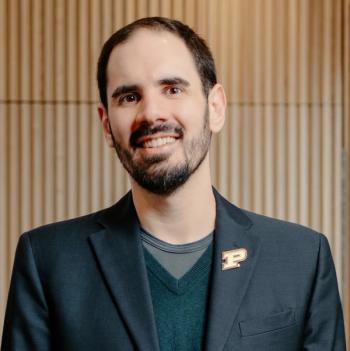
Brandon E. Boor is the Dr. Margery E. Hoffman Associate Professor in the Lyles School of Civil and Construction Engineering at Purdue University. | Photo Credit: © Brandon Boor.
In the second part of our interview with Brandon Boor of Purdue University, he discusses how his team controls experimental variables during cleaning experiments in order to obtain interpretable data.
Scientist With Portable Spectrometer in Natural Field Setting ©  By Tika -chronicles-stock.adobe.com
The bulky bench-top NIR spectrometer is quietly being dismantled and rebuilt as a wafer-scale photonic chip, a self-calibrating algorithm, and a sensor small enough to ride in a shirt pocket. What once demanded a grating, a moving mirror, and a climate-controlled lab now fits inside a handheld module, a bioreactor probe, or a drone payload, and it increasingly figures out what it is looking at on its own.
Sizing Up the Nanoscale: Measuring Nanocluster Aerosol in Indoor Air
In the first part of a multi-part Q&A, Brandon Boor, the Dr. Margery E. Hoffman Associate Professor in the Lyles School of Civil and Construction Engineering at Purdue University, describes the instrumentation and methodology behind measuring nanoparticle size distributions at the nanocluster scale (1–3 nm) and outlines the technical challenges of acquiring reliable, real-time data at these dimensions.
Human body wireframe on glowing platform undergoing futuristic body scan. © sergray(noAIelemens) -chronicles-stock.adobe.com
Jurgen Popp, Thomas Mayerhofer, and colleagues at Leibniz IPHT and Friedrich Schiller University Jena introduce the Personalized Optical Digital Twin (PODT), a Photonics21 contribution to Europe's Virtual Human Twin ecosystem that connects molecular photonics—Raman blood analysis, coherent Raman tissue imaging, and multimodal endomicroscopy—with longitudinal physiology and clinical data. Drawing on the published multicenter INTELLIGENCE trials, the authors argue that technical feasibility and clinical utility must be evaluated separately as the field moves toward Europe's FP10 research agenda.