SPEC PerkinElmer 10.13
News|Articles|October 5, 2026

Previewing an Upcoming Pathways in Spectroscopy Series

Listen
0:00 / 0:00

Key Takeaways

  • SpecAcademy pools society expertise with publisher-scale platform development and promotion to deliver standardized spectroscopy training that individual societies lacked resources to build alone.
  • Erosion of mentorship and employer-sponsored instruction has produced undertrained analysts across industry and public laboratories, while undergraduate and graduate curricula often miss broad, applied spectroscopy competence.
SHOW MORE

"Pathways in Spectroscopy" will be releasing weekly snippets from a recent panel discussion that focused on the state of spectroscopy education.

Recently, a new education resource, called SpecAcademy, was launched. This e-learning platform is a collaboration between professional spectroscopy societies and MJH Life Sciences' Spectroscopy magazine.1 According to Ellen Miseo, the idea grew out of a concern shared by many senior society members: there is a gap in the education and knowledge of the people operating instruments in laboratories, yet companies are reluctant to pay for extensive training courses or lose employees' time to them.1,2

"Quite frankly, neither society has the horsepower to have done this on our own," Miseo said.1

Under the partnership, the societies provide instructors and content, while the publisher builds the platform and promotes it beyond what the societies could reach alone.

The Disappearing Apprenticeship

Several panelists pointed to the loss of mentorship as a root cause. Miseo noted that most experienced spectroscopists began their careers in something of an apprenticeship with a senior expert. Today, that expert often does not exist, and a new hire is expected to be the expert. Peter Larkin added that industry now moves faster and invests less in training. Early in his career, he said, his employer paid Norm Colfax to come in every two weeks for five years to train him. Larkin noted that this a type of mentorship is something that "doesn't really exist in industry anymore."3

Jim de Haseth observed that the need extends beyond industry to government and state laboratories, which often have fewer resources. Academic training has not filled the gap either. Mary Carrabba said that undergraduate spectroscopy education has been diluted by an emphasis on mass spectrometry and nuclear magnetic resonance (NMR), while graduate training tends to be narrowly focused.3

The Right Tool for the Job

The result, panelists said, is that analysts often reach for the technique they know best rather than the one best suited to the problem.3 The panel described a complex formulation that an NMR spectroscopist wanted to send for liquid chromatography–mass spectrometry (LC–MS) analysis, when a quick infrared (IR) measurement identified the major and minor components. The same problem exists within vibrational spectroscopy, where users may buy an instrument or accessory that delivers only a partial answer.3

Why Training Declined

The SpecAcademy instructors also discussed how the rise of automation convinced many organizations that expertise was no longer needed. Miseo recalled Pittcon courses that once turned participants away but now draw only 5–10 people.4,5 Jeff D'Agostino said the Covid-19 pandemic pushed learners further from in-person instruction, and that younger scientists increasingly prefer short online videos.5 Because many free videos do not present useful or accurate information, there was a gap in getting quality spectroscopy education online.

SpecAcademy is designed to fill this need, offering curated lessons of 20 to 30 minutes that learners can complete during a lunch break.5 Panelists agreed that hands-on, in-person courses remain the superior format, but that an accessible online option is critical.

What Comes Next

The first courses cover fundamentals, including spectral interpretation and spectroscopic theory, with instrumentation courses on interferometric and dispersive instruments planned. Future topics include spectral searching, sampling techniques such as attenuated total reflectance (ATR), UV-visible spectroscopy, and emerging photothermal methods.6 Most chemometricians, the panel noted, will say that chemometrics won't fix bad data.6

Over the next few months, "our “Pathways in Spectroscopy” series will highlight some of the key, career-focused conversations that took place during this panel discussion. We are looking forward to sharing these clips with you soon.

References
  1. Miseo, E.; Carrabba, M.; Larkin, P. J.; D’Agostino, J.; de Haseth, J.; Wetzel, W. What is SpecAcademy and What Need Does It Fill? Spectroscopy Online, 2026. https://www.spectroscopyonline.com/view/what-is-specacademy-and-what-need-does-it-fill- (accessed September 29, 2026).
  2. Wetzel, W. Previewing a SpecAcademy Roundtable Discussion. Spectroscopy Online, 2026. https://www.spectroscopyonline.com/view/previewing-a-specacademy-roundtable-discussion (accessed September 30, 2026).
  3. Miseo, E.; Carrabba, M.; Larkin, P. J.; D’Agostino, J.; de Haseth, J.; Wetzel, W. The Mismatch Between Education and Industry. Spectroscopy Online, 2026. https://www.spectroscopyonline.com/view/the-mismatch-between-education-and-industry (accessed September 29, 2026).
  4. Miseo, E.; Carrabba, M.; Larkin, P. J.; D’Agostino, J.; de Haseth, J.; Wetzel, W. The Ongoing Decline of Spectroscopy Expertise. Spectroscopy Online, 2026. https://www.spectroscopyonline.com/view/the-ongoing-decline-of-spectroscopy-expertise (accessed September 30, 2026).
  5. Miseo, E.; Carrabba, M.; Larkin, P. J.; D’Agostino, J.; de Haseth, J.; Wetzel, W. Making Spectroscopy Training More Accessible. Spectroscopy Online, 2026. https://www.spectroscopyonline.com/view/making-spectroscopy-training-more-accessible (accessed October 1, 2026).
  6. Miseo, E.; Carrabba, M.; Larkin, P. J.; D’Agostino, J.; de Haseth, J.; Wetzel, W. Where Should Spectroscopy Curriculum Go Next? Spectroscopy Online, 2026. https://www.spectroscopyonline.com/view/where-should-spectroscopy-curriculum-go-next- (accessed October 8, 2026).

Related to this article

Infrared Reimagined: How FT-IR Spectroscopy Learned to Read Molecules, ©  Luis Eduardo  -chronicles-stock.adobe.com
FT-IR spectroscopy, long treated as a mature bench technique for confirming a carbonyl stretch or fingerprinting a polymer, has quietly become one of chemistry’s most versatile discovery engines: it now infers molecular structure straight from a spectrum without a reference library, resolves chemistry tens of nanometers wide, and screens a fingerstick of blood for disease in minutes. The last five years of published research show FT-IR moving from a confirmatory tool into a predictive, autonomous, and field-ready analytical platform.
FACSS 2026 Award Interviews ©  Erin -chronicles-stock.adobe.com
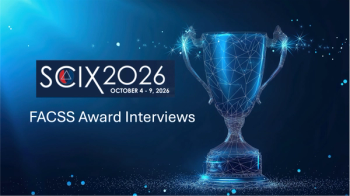
Eight FACSS award winners at SciX 2026, One LIBS trailblazer. Forty-eight questions. And not one of them is a softball. Award season in spectroscopy usually means polite applause, a plaque, and a photo. We're not completely interested only in the award sessions. The eight scientists honored at SciX 2026 in Sparks, Nevada, along with LIBS researcher Alessandro De Giacomo, are pushing Raman into operating rooms, flying LIBS on drones, reading chemistry off Mars, and tracing toxic metals downwind of industrial sites. Their work makes big claims. In the coming days, Spectroscopy will sit down with eight of these researchers and ask whether those claims hold up. The interviews that follow won't just celebrate. They'll press on the gaps between simulation and experiment, between the lab bench and the clinic, and between a clever paper and an instrument someone will actually buy and use.
Spectral Frontiers: Past the Diffraction Limit (FT-IR Spectroscopy)
Fourier-transform infrared (FT-IR) spectroscopy, long the workhorse of molecular fingerprinting, is being reinvented by photothermal detection schemes and quantum cascade laser (QCL) sources that push spatial resolution and analysis speed far beyond classical dispersive and interferometric limits. New instrumentation such as optical photothermal infrared (O-PTIR) microscopy and laser direct infrared (LDIR) chemical imaging is enabling sub-micron, label-free chemical mapping of biological, environmental, and pharmaceutical samples. This article reviews the latest FT-IR-adjacent technologies, recent patents, and research driving the field, featuring perspectives from the scientists and instrument developers advancing the technique.