In this panel discussion, five SpecAcademy instructors sit down to talk about the main reasons SpecAcademy was started and the current state of spectroscopy education.
Panelists from the Society for Applied Spectroscopy, the Coblentz Society, Syensqo, Specac, and the University of Georgia discuss how a mismatch between academic curricula and industry practice leaves many analysts unsure when, and how, to use infrared and Raman spectroscopy.
In the second part of a panel discussion on SpecAcademy, participants looked at why analysts often choose the wrong technique for a given problem and how the training program aims to fix that. SpecAcademy is designed to teach users how to match the right technique and instrument to a specific sample and data need.
The panel began by discussing the current disconnect between academic training and industrial practice. Citing an article in the Journal of Chemical Education, panelists noted that university curricula tend to emphasize nuclear magnetic resonance (NMR), mass spectrometry, and ultraviolet (UV) spectroscopy. Infrared (IR) spectroscopy, one of the most widely used techniques in industry, gets comparatively little attention. The panel presented this mismatch as one major reason for creating SpecAcademy.
Participants also blamed poor technique selection on declining hands-on expertise. Analysts tend to default to the tools they know best, even when another method would suit the problem better. IR, panelists argued, can be a fast, efficient first analysis for unknown or partially characterized materials, especially complex formulations. Elemental analysis complements it by identifying the constituent elements. One formulation example showed the cost of a poor choice: using liquid chromatography–mass spectrometry (LC–MS) could have turned a straightforward characterization into a much larger research effort.
The discussion then moved beyond the familiar NMR-versus-MS comparison. Panelists stressed that choosing the right tool means weighing the sample, the data needed, the instrument, and the accessory. That includes choices within vibrational spectroscopy, such as IR versus Raman. Later SpecAcademy courses are expected to cover these decisions.
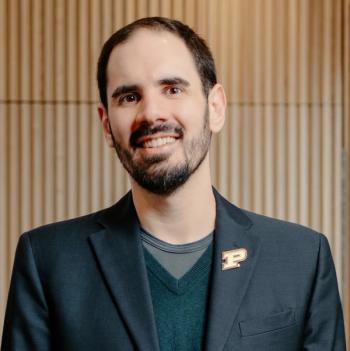
The panelists featured in this video include Ellen Miseo, secretary for the Society for Applied Spectroscopy (SAS) and education coordinator for SAS and the Coblentz Society; Peter Larkin, manager of spectroscopy, thermal analysis, and chromatography at Syensqo; Mary Carrabba, forensic and industrial spectroscopist and virtual office manager for the Coblentz Society; Jeff D'Agostino, senior applications chemist at Specac, Inc.; and James de Haseth, emeritus professor of chemistry at the University of Georgia and director of Raman and infrared courses.
This panel discussion is the second of five parts. You can access the available SpecAcademy courses at the following link: